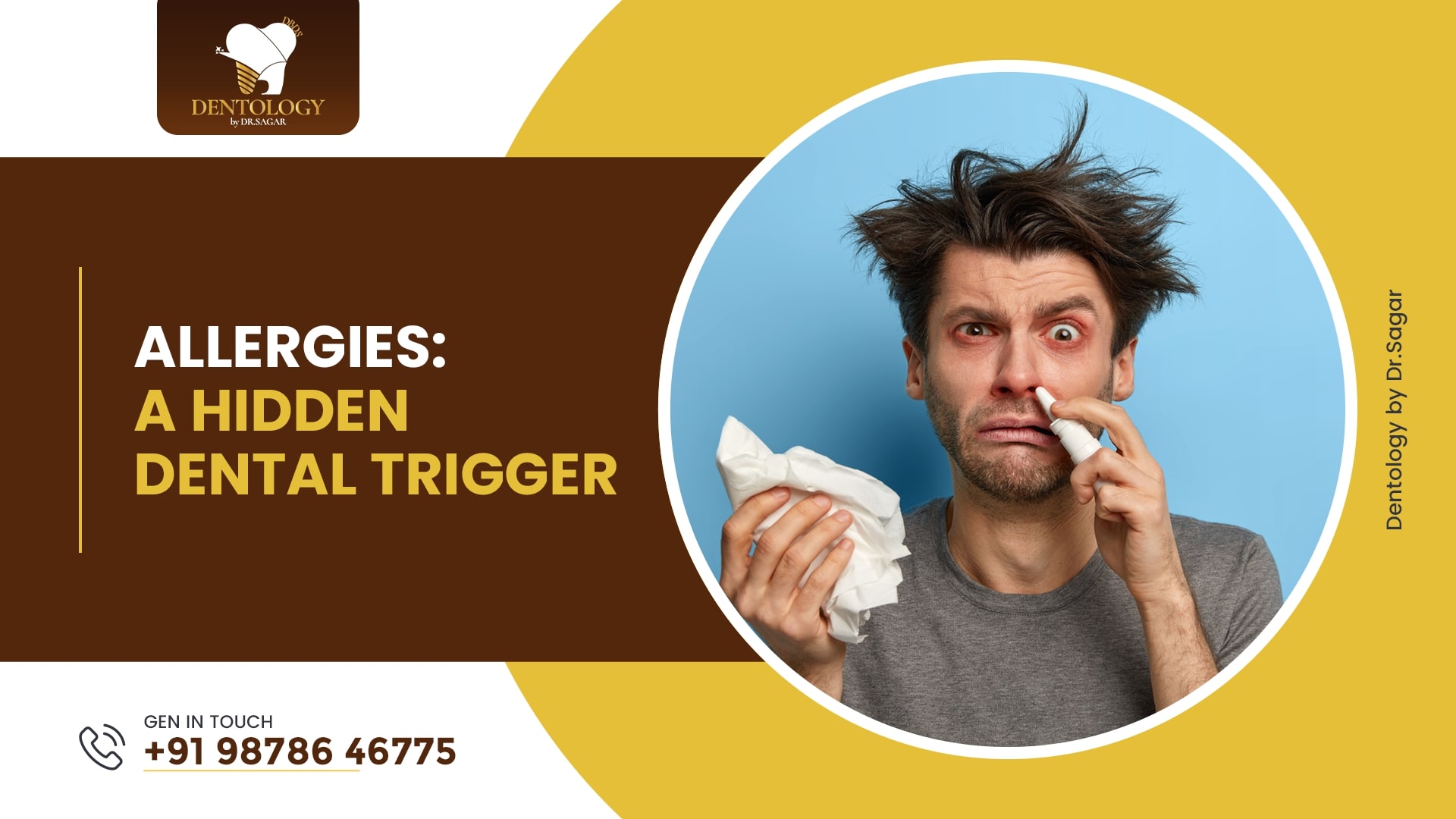
Seasonal allergies, dust allergies, and food sensitivities, many people experience them, but very few realise they can also affect your teeth, gums, and mouth.
At Dentology by Dr. Sagar, Ludhiana, we believe in helping you understand not just what is happening but why, so you can take better care of your overall oral health.
Let’s break down how allergies and your mouth are connected, in simple, practical terms.
What Happens in Your Mouth When You Have Allergies?
When your body reacts to allergens like pollen, dust mites, pet dander, or certain foods, it triggers inflammation.
This inflammation doesn’t only affect your eyes, nose, and throat — it can impact your mouth in multiple ways.
Here’s how:
1. Dry Mouth (Xerostomia)
One of the most common side effects of allergies.
- Allergies cause mouth-breathing due to blocked nasal passages.
- Many anti-allergy medicines (antihistamines) reduce saliva flow.
- Low saliva allows bacteria to grow faster.
Result:
More chances of cavities, bad breath, and gum irritation.
2. Sinus Pressure Causing Tooth Pain

Your upper back teeth (molars) sit very close to your sinus cavities.
- When sinuses are inflamed or filled with mucus, they put pressure on the tooth roots.
- This can feel like dull, achy tooth pain – often mistaken for a dental problem.
Result:
“Sinus toothache” – a real thing, and very common during allergy season.
3. Gum Swelling and Irritation
Allergies trigger inflammation throughout the body.
- This can make gums more sensitive.
- Some people experience redness, puffiness, or mild bleeding during allergy flare-ups.
Result:
Gums may feel tender or irritated even without plaque buildup.
4. Burning Mouth or Itchy Palate
Food allergies or pollen-food cross-reactions can cause:
- Itchy gums
- Tingling on the tongue or lips
- A scratchy, burning feeling on the palate
This is known as Oral Allergy Syndrome (OAS) – a well-documented condition recognised by the American Academy of Allergy, Asthma & Immunology (AAAAI).
5. Bad Breath (Halitosis)
Dry mouth + post-nasal drip = perfect setting for bad breath.
- Mucus drains from the sinuses into the throat
- Bacteria break it down
- A strong, unpleasant smell is released from the mouth
Result:
Allergy season can make breath smell worse than usual – even with good brushing.
How to Protect Your Dental Health If You Have Allergies
The good news?
Simple habits can prevent allergy-related dental issues.
1. Stay Hydrated
Water helps keep saliva flowing and balances the mouth’s pH.
2. Use a Humidifier at Home

Especially at night – it helps prevent extreme dryness.
3. Rinse After Using Antihistamines
A quick water rinse reduces dryness-causing residue.
4. Try Nasal Breathing Exercises
Even a few minutes a day supports better airflow and less mouth-breathing.
5. Maintain Excellent Oral Hygiene
Allergy season is when plaque builds up faster.
- Brush twice
- Floss daily
- Use an alcohol-free mouthwash
6. Visit Your Dentist If Tooth Pain Persists
If sinus pressure isn’t the cause, early dental intervention is best.
When Should You See a Dentist?
Contact a dentist if you notice:
- Tooth pain that doesn’t go away after allergy symptoms settle
- Gum bleeding or swelling
- Bad breath lasting more than a week
- Frequent dry mouth
- Burning sensation in the mouth
These symptoms can overlap with dental concerns, so expert evaluation ensures nothing important is missed.
Gentle, Informed Care at Dentology by Dr. Sagar
At Dentology by Dr. Sagar, we don’t just treat teeth – we look at your oral health in the context of your entire body.
Whether allergies are affecting your smile or you’re experiencing seasonal discomfort, our approach is calm, attentive, and customised.
📞 Phone: +91 98786 46775
Small changes in awareness can make a big difference to your oral health, especially during allergy season.