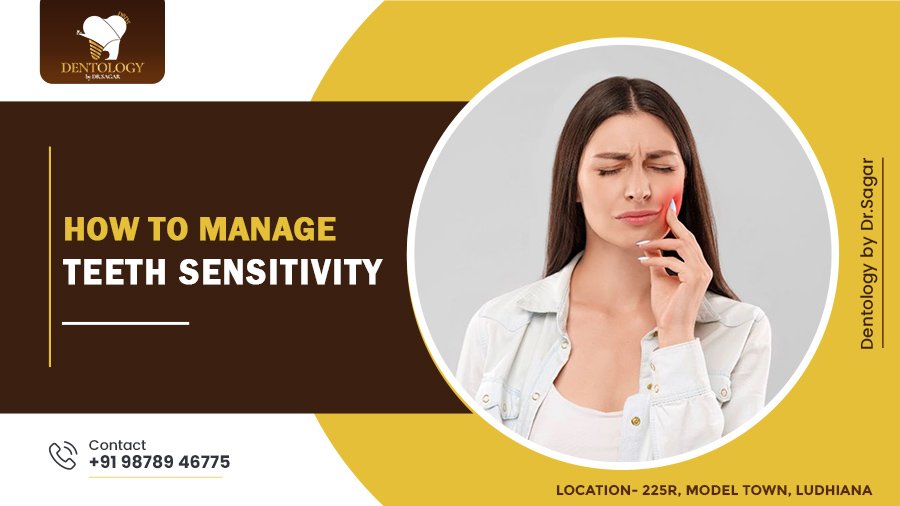
Do you wince when you eat ice cream or sip hot coffee? You might have sensitive teeth. This common problem affects many people. But don’t worry! At Dentology by Dr. Sagar, we understand how uncomfortable tooth sensitivity can be. We’re here to help you find relief and enjoy your favorite foods again.
What Causes Sensitive Teeth?
Before we talk about solutions, let’s understand why teeth become sensitive:
- Worn enamel: This is the hard outer layer of your teeth. It can wear down over time.
- Exposed roots: When gums recede, the sensitive parts of your teeth can be exposed.
- Cavities: Tooth decay can cause sensitivity.
- Cracked teeth: Even small cracks can lead to sensitivity.
- Teeth grinding: This can wear down your enamel.
- Recent dental work: Sometimes teeth feel sensitive after fillings or other procedures.

How to Manage Teeth Sensitivity
Use a Soft-Bristled Toothbrush
Hard bristles can wear down your enamel and hurt your gums. Switch to a soft-bristled brush. Be gentle when you brush. Your teeth will thank you!
Try Medicated Toothpaste
Special toothpaste for sensitive teeth can help. They have ingredients that block the sensation from the tooth surface to the nerve. Use it regularly for a few weeks to see results but only after consulting your dentist.
Watch What You Eat
Acidic foods and drinks can make sensitivity worse. Try to limit things like:
- Citrus fruits
- Tomatoes
- Pickles
- Soda
- Wine
When you do have these, rinse your mouth with water afterward.
Use a Fluoride Mouthwash

Fluoride helps strengthen your tooth enamel. Use a fluoride mouthwash once a day. This can help reduce sensitivity over time.
Don’t Brush Right After Eating
Wait at least 30 minutes after eating to brush your teeth. This is especially important after having acidic foods. Acids soften your enamel, and brushing too soon can damage it.
Consider a Mouth Guard
If you grind your teeth at night, ask your dentist about a mouth guard. This can protect your teeth from wear and tear.
Avoid Tooth-Whitening Products
Some whitening products can increase sensitivity. Talk to your dentist about safe options if you want to whiten your teeth.
Use a Straw
When drinking cold or acidic drinks, use a straw. This helps the liquid bypass your teeth, reducing contact and sensitivity.
Keep Up with Dental Visits
Regular check-ups can catch problems early. Your dentist can spot signs of enamel wear, gum recession, or other issues that might cause sensitivity.
When to See a Dentist
If your sensitivity doesn’t improve with these tips, it’s time to see a dentist. You should also see a dentist if:
- The sensitivity is severe
- It lasts for several days
- You have other symptoms like swelling or pain
Remember, tooth sensitivity can be a sign of a more serious problem. It’s always best to get it checked.
Don’t let tooth sensitivity hold you back from enjoying life to the fullest! At Dentology by Dr. Sagar, we’re dedicated to helping you achieve optimal oral health and comfort. Our experienced team can provide personalized solutions for your tooth sensitivity, from professional treatments to expert advice on home care. Contact Dentology by Dr. Sagar to schedule your consultation today. Your comfort is our priority; the solution is just a phone call away!