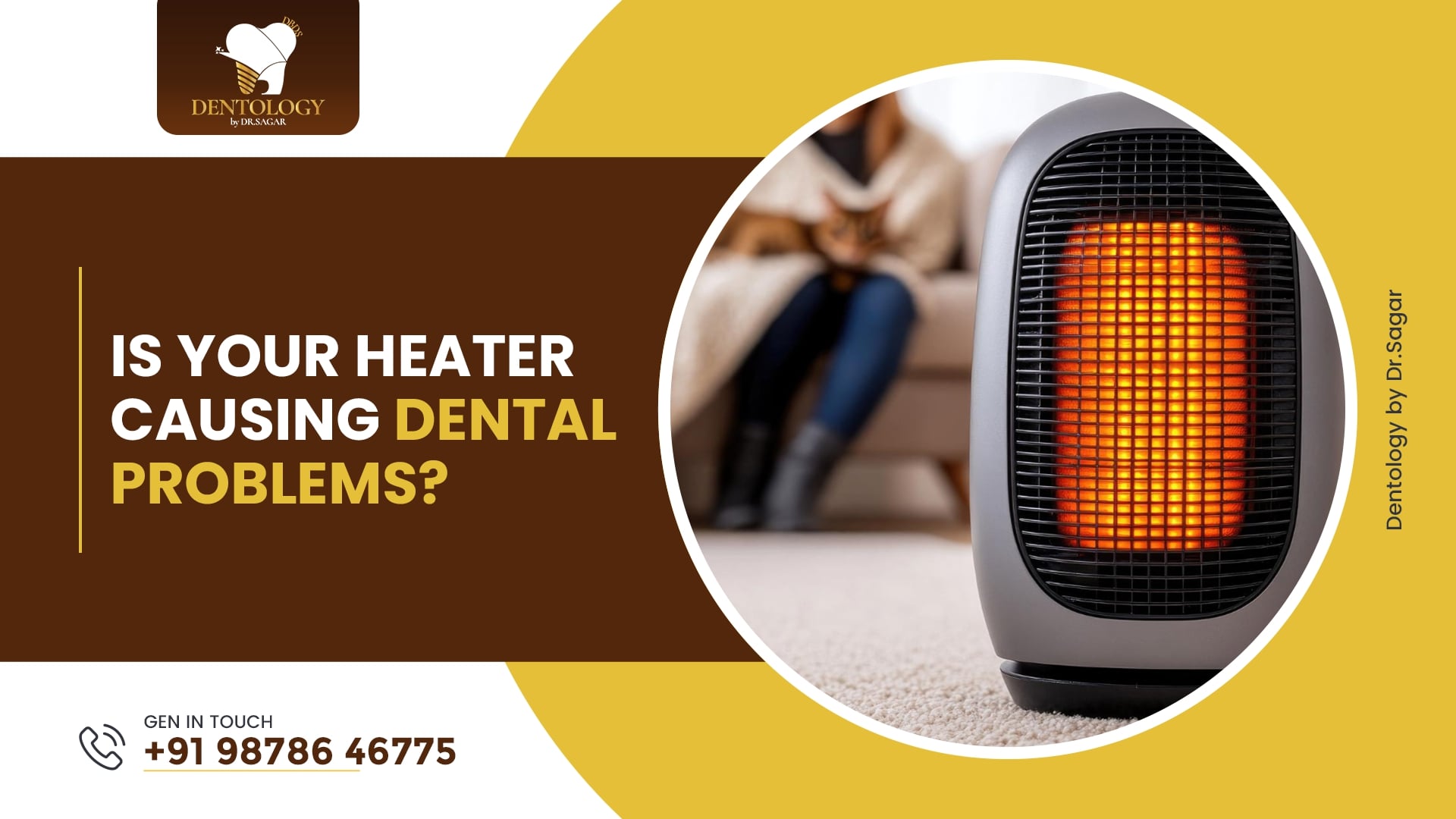
When winter arrives, heaters become essential for comfort. But while heating systems keep your home warm, they could also create unexpected oral health problems. Many people don’t realize that dry indoor air from heaters can negatively affect the teeth, gums, and mouth – especially during long winter months.
At Dentology by Dr. Sagar, Ludhiana, we treat many patients who experience increased tooth sensitivity, mouth dryness, and gum discomfort specifically during winter. The reason? Indoor heating plays a bigger role than most people think.
How Heaters Can Affect Your Oral Health

Heaters reduce the moisture level in the air, which leads to dry mouth (xerostomia) – a condition where saliva levels drop. Saliva is essential for oral health because it:
- Neutralizes harmful acids in the mouth
- Helps wash away food particles and bacteria
- Protects enamel from decay
Without enough saliva, bacteria multiply faster, resulting in multiple dental issues.
Common Dental Problems Linked to Heater Use
1. Tooth Sensitivity and Enamel Damage
A dry mouth increases acidity, which weakens enamel. Once the enamel thins out, teeth become sensitive to hot, cold or sweet foods.
2. Increased Risk of Cavities
With less saliva to rinse the mouth, plaque sticks to teeth more easily, making cavity formation more likely.
3. Gum Irritation and Bleeding
Dehydrated oral tissues can inflame the gums, leading to tenderness, swelling or bleeding.
4. Bad Breath
Dry mouth allows odour-causing bacteria to grow rapidly, leading to persistent bad breath.
5. Mouth Ulcers and Cracks
Dry air causes the inner mouth lining and lips to lose moisture, sometimes resulting in ulcers or cracked corners of the lips.
Are You at Higher Risk?
Certain individuals are more likely to develop oral issues from winter heating, including:
- Mouth breathers
- People who sleep with the heater on
- Patients taking medications that cause dryness
- Senior citizens
- People who don’t drink enough water
- Individuals with sinus or allergy problems
If you notice more mouth discomfort in winter, your heater could be playing a role.
How to Protect Your Teeth While Using a Heater
You don’t need to stop using your heater – you just need to balance comfort and oral health. Try these dentist-approved tips:
✔ Stay Hydrated
Drink plenty of water throughout the day. It maintains saliva flow and protects enamel.
✔ Use a Humidifier

A humidifier adds moisture back into the air and significantly reduces dry mouth during sleep.
✔ Breathe Through Your Nose
If cold makes you breathe through your mouth, try covering your nose with a mask or scarf outdoors and treat any nasal congestion.
✔ Avoid Sugary Winter Drinks
Hot chocolate, sugary coffee, and sweet teas can worsen enamel damage. Choose low-sugar options whenever possible.
✔ Chew Sugar-Free Gum
Chewing stimulates saliva production and keeps the mouth moist.
✔ Maintain Strong Oral Hygiene

Brush twice daily, floss every night, and use alcohol-free mouthwash to prevent dryness.
Professional Winter Dental Care Matters
If you frequently notice one or more of the following during winter, it’s time to book a dental check-up:
- Tooth sensitivity
- Bad breath that doesn’t go away
- Gum bleeding or swelling
- Frequent mouth ulcers
- Cavities appearing without warning
At Dentology by Dr. Sagar, Ludhiana, we assess winter-related dental symptoms and provide solutions such as fluoride strengthening, gum therapy, sensitivity care, saliva-boosting treatments, and customized night-time mouth moisturization plans.
Winter comfort shouldn’t come at the cost of your smile. With the right care, you can stay warm and keep your teeth and gums healthy all season long.