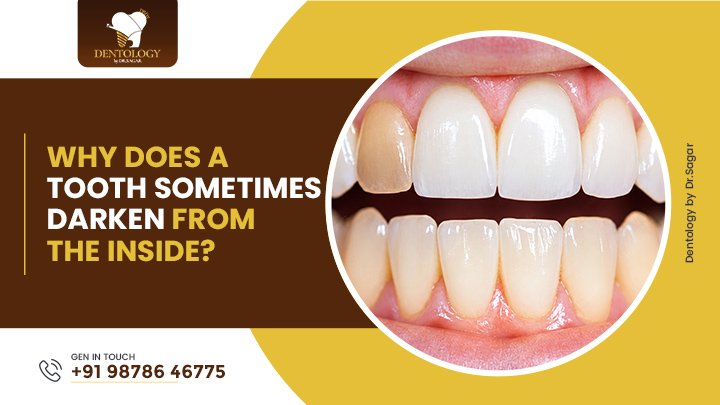
Have you noticed one tooth becoming grey, brown, or darker than the others, even though you brush regularly? A change in tooth colour can be confusing, especially when there is no pain or visible damage. While some stains develop on the surface, tooth darkening from the inside may indicate a problem within the tooth that needs professional attention.
Understanding the reason for this change can help you seek appropriate treatment before the problem becomes more serious. At Dentology by Dr. Sagar in Ludhiana, a dental examination can help identify the possible cause of discoloration and determine the next steps.
What Causes Tooth Darkening From the Inside?
A tooth may change colour for several reasons. The most common causes involve previous injury, damage to the inner pulp, deep decay, or changes after dental treatment.
1. An Old Tooth Injury
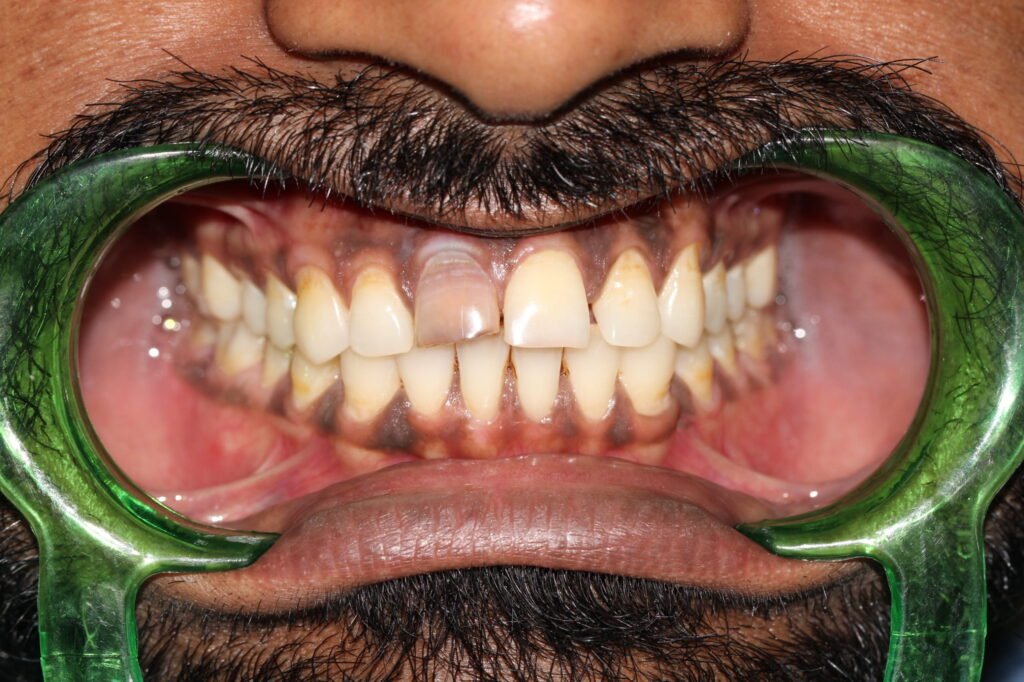
A tooth can become discoloured weeks, months, or even years after an accident. A fall, sports injury, or direct impact may damage the blood vessels and nerves inside the tooth. As the inner tissues change, the tooth may gradually develop a grey or brown appearance.
Sometimes, the injury may seem minor at first. If you have a tooth that changed colour after an accident, arrange a dental examination even if you do not remember experiencing severe pain.
2. Damage to the Tooth Pulp
The pulp is the soft tissue inside a tooth that contains nerves and blood vessels. Deep decay, cracks, or trauma can damage this tissue. In some cases, the pulp may die, allowing the tooth to become darker over time.
Tooth darkening from the inside can be one sign of pulp damage, but colour alone cannot confirm the diagnosis. A dentist may examine the tooth, assess its response to appropriate tests, and recommend an X-ray if needed.
3. Deep Tooth Decay
Cavities that progress beyond the outer layers of a tooth can affect the inner structure. The tooth may develop brown or black areas, and the damage may eventually reach the pulp.
Not every dark spot is caused by deep decay. Surface staining and other forms of discoloration can look similar, which is why professional assessment is important.
4. Changes After Root Canal Treatment
A tooth may become darker after root canal treatment. This can happen because of changes within the tooth or the materials used during an earlier procedure.
If a previously treated tooth looks grey or brown, your dentist can assess its condition and discuss suitable cosmetic or restorative options. A colour change does not automatically mean that the root canal treatment has failed.
Can a Tooth Darken Without Causing Pain?
Yes. A tooth can become darker without causing noticeable discomfort. Some injuries and pulp problems develop slowly, and symptoms may not appear immediately.
However, the absence of pain does not always mean that the tooth is healthy. Watch for other changes, such as:
- A tooth turning grey, brown, or black
- Sensitivity when biting or chewing
- Swelling or tenderness around the tooth
- A small pimple-like bump on the gum
- An unpleasant taste or recurring discomfort
If you notice these symptoms, arrange a dental assessment. Seek urgent dental care if you develop facial swelling, fever, or severe pain.
How Does a Dentist Find the Cause of a Dark Tooth?
The first step is a clinical examination. Your dentist will ask when the colour change began, whether the tooth has been injured, and whether you have experienced pain or previous dental treatment.
Depending on the findings, the assessment may include:
- Visual examination: To check the tooth surface, existing restorations, cracks, and visible decay.
- Pulp testing: To assess how the tooth responds to appropriate tests.
- Dental X-ray: To examine the root and surrounding bone and look for certain signs of infection or other changes that are not visible during a routine examination.
These findings help the dentist distinguish between surface staining, internal discoloration, and problems that may require treatment.
What Are the Treatment Options for a Dark Tooth?
The right treatment depends on the cause of the discoloration and whether the tooth is healthy enough to preserve.
Professional Cleaning
If the colour change is caused by external staining, professional cleaning may help improve the appearance. However, cleaning alone will not correct discoloration that originates inside the tooth.
Internal Tooth Bleaching
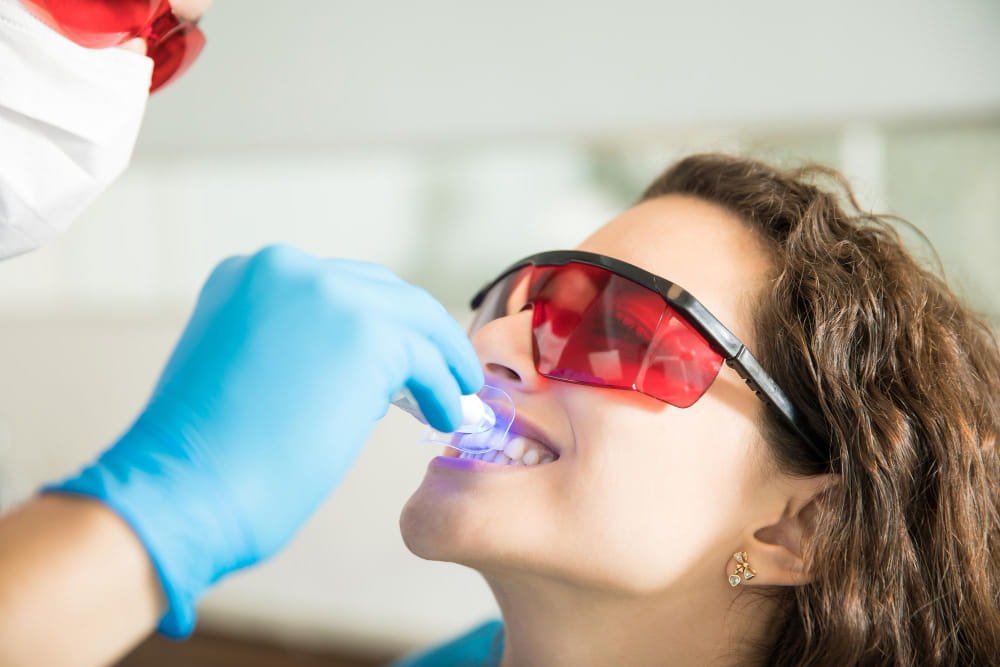
For certain teeth that have darkened after root canal treatment, internal bleaching may be an option. This procedure is different from ordinary whitening because the treatment is directed at discoloration within the tooth. Your dentist must first confirm that this approach is suitable.
Root Canal Treatment
If the pulp is irreversibly damaged or infected, root canal treatment may be recommended. The procedure involves removing the affected pulp tissue, cleaning the root canal system, and sealing it. The tooth may then need an appropriate restoration to protect it.
Root canal treatment is not necessary for every dark tooth. The decision depends on the examination and diagnosis.
Dental Filling or Crown
If decay or structural damage has affected the tooth, a filling or crown may be needed. A filling can restore a tooth with suitable remaining structure, while a crown may be recommended when more extensive protection is required.
Your dentist will consider the amount of remaining tooth structure, the location of the tooth, and your overall dental health before recommending a restoration.
Can You Prevent a Tooth From Becoming Dark?
Not every cause of tooth discoloration can be prevented, particularly when it follows an accident. However, good oral care and timely dental treatment can reduce the risk of several underlying problems.
Follow these habits to protect your teeth:
- Brush twice daily with fluoride toothpaste.
- Clean between your teeth every day.
- Limit frequent sugary snacks and drinks.
- Wear a suitable mouthguard during contact sports.
- Seek dental care after a tooth injury, even if the damage appears minor.
- Do not ignore a tooth that changes colour.
- Attend regular dental check-ups as recommended by your dentist.
Avoid trying to whiten a dark tooth with harsh home remedies. These methods may irritate your gums or damage your teeth without addressing the underlying cause.
When Should You Visit a Dentist?
Book a dental appointment if one tooth becomes noticeably darker, particularly if the change occurs after an injury or alongside other symptoms. Early assessment can help identify the cause and determine whether treatment is needed.
Do not wait for pain to develop before seeking advice. Some dental problems can progress quietly, and an examination may help identify concerns before they become more complicated.
If you are concerned about tooth darkening from the inside, Dentology by Dr. Sagar can assess the tooth and discuss suitable treatment options based on your dental condition.
Book a Dental Consultation in Ludhiana
A tooth that changes colour deserves attention, even when it does not hurt. Finding the cause is the first step towards choosing the right treatment and protecting your natural tooth where possible.
For an assessment of tooth darkening from the inside, contact Dentology by Dr. Sagar, led by Dr. Sagar Sachdeva, Prosthodontist and Dental Implantologist.
Call: +91 98786 46775
Frequently Asked Questions
1. Why does a tooth darken from the inside?
Tooth darkening from the inside can result from an old injury, damage to the tooth pulp, deep decay, or changes following root canal treatment. A dental examination can help identify the likely cause.
2. Can a tooth turn grey or black because of nerve damage?
Yes. Damage to the pulp, which contains the tooth’s nerves and blood vessels, can cause a tooth to become grey, brown, or black. However, colour changes alone cannot confirm nerve damage.
3. Can a dark tooth be healthy if there is no pain?
A dark tooth may not cause pain even when an underlying problem is present. If you notice a change in colour, arrange a dental check-up rather than relying on the absence of symptoms.
4. Can tooth darkening from the inside be treated?
Yes. Depending on the cause, treatment may include internal bleaching, root canal treatment, a filling, or a dental crown. The appropriate option depends on the condition of the tooth.
5. Is internal tooth discoloration the same as surface staining?
No. Surface stains affect the outside of the tooth and may be linked to foods, drinks, or tobacco. Internal discoloration develops within the tooth structure and may require a different treatment approach.
6. Can a dental X-ray help identify the cause of a dark tooth?
A dental X-ray can help assess the tooth root, surrounding bone, and certain signs of infection or previous injury. Your dentist may recommend one alongside a clinical examination.
7. Should I visit a dentist if my tooth suddenly turns dark?
Yes. A sudden or gradual colour change should be assessed, particularly after an injury. Seek urgent dental care if you also develop facial swelling, fever, or severe pain.
8. Where can I get a dark tooth examined in Ludhiana?
You can contact Dentology by Dr. Sagar in Model Town, Ludhiana, for an assessment of tooth discoloration and advice about suitable treatment options.