
Why Do Teeth Sometimes Crack Without Warning?
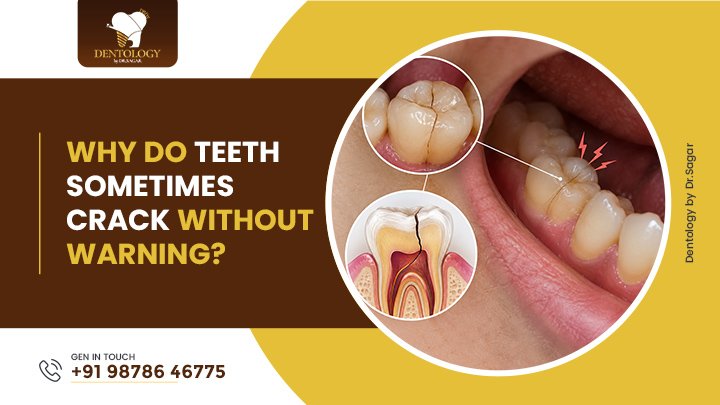
Have you ever bitten into something and suddenly felt a sharp pain in one of your teeth? You may check the tooth and find no visible damage, yet the pain returns whenever you bite down. This can happen with a cracked tooth. Although a tooth may seem to crack without warning, the damage often develops gradually. Years of chewing pressure, teeth grinding, large fillings, ageing, or an accidental injury can weaken a tooth. Sometimes, biting into a hard food is simply the final trigger that makes the crack noticeable. What Causes a Cracked Tooth? Teeth are designed to withstand significant pressure, but repeated stress can eventually weaken them. Several factors can increase the risk of a cracked tooth. Biting Hard Foods Ice, hard candies, nuts, and unpopped popcorn kernels can put excessive pressure on a tooth. Repeatedly chewing hard foods may contribute to small cracks that become larger over time. Teeth Grinding Grinding or clenching your teeth places considerable pressure on the enamel and underlying tooth structure. If you grind your teeth while sleeping, you may not realise how much stress your teeth are experiencing. Large Fillings A tooth with a large filling may have less natural structure left to support it. Over time, normal chewing forces can place stress on the remaining tooth and increase the possibility of a cracked tooth. Age and Previous Dental Treatment Teeth experience years of chewing forces and temperature changes. As we get older, the risk of cracks can increase. Teeth that have already undergone extensive treatment may also require additional protection. Accidents and Injuries A blow to the mouth from a fall, sports injury, or accident can cause a tooth to crack. The damage may not always be obvious immediately. What Does a Cracked Tooth Feel Like? The symptoms of a cracked tooth can vary. Some people experience sharp pain when biting down or releasing their bite. Others notice sensitivity to hot or cold foods and drinks. Common signs include: Pain when chewing Sudden sensitivity to cold Pain that comes and goes Discomfort when biting on one side Sensitivity to sweets Difficulty identifying which tooth is causing the pain