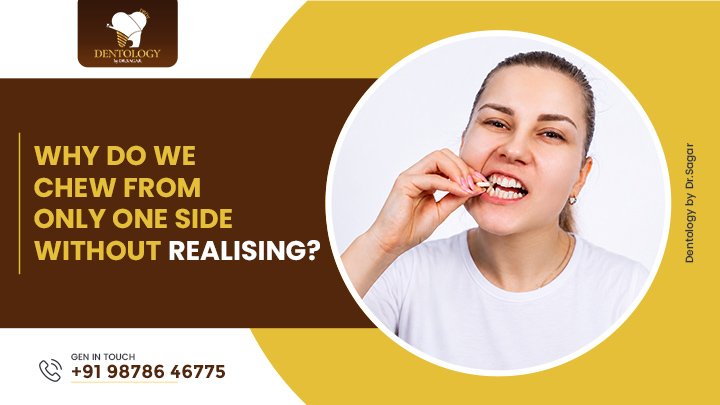
Most people never think about which side of the mouth they use for chewing. However, many develop a habit of chewing almost entirely on one side without even noticing it. While this may seem harmless, consistently chewing on one side can place uneven pressure on your teeth, gums, jaw muscles, and jaw joints over time.
At Dentology by Dr. Sagar, Ludhiana, we often find this habit during routine dental examinations. Identifying the reason behind one-sided chewing is important because it may indicate an underlying dental problem that requires attention.
Why Do People Chew on Only One Side?
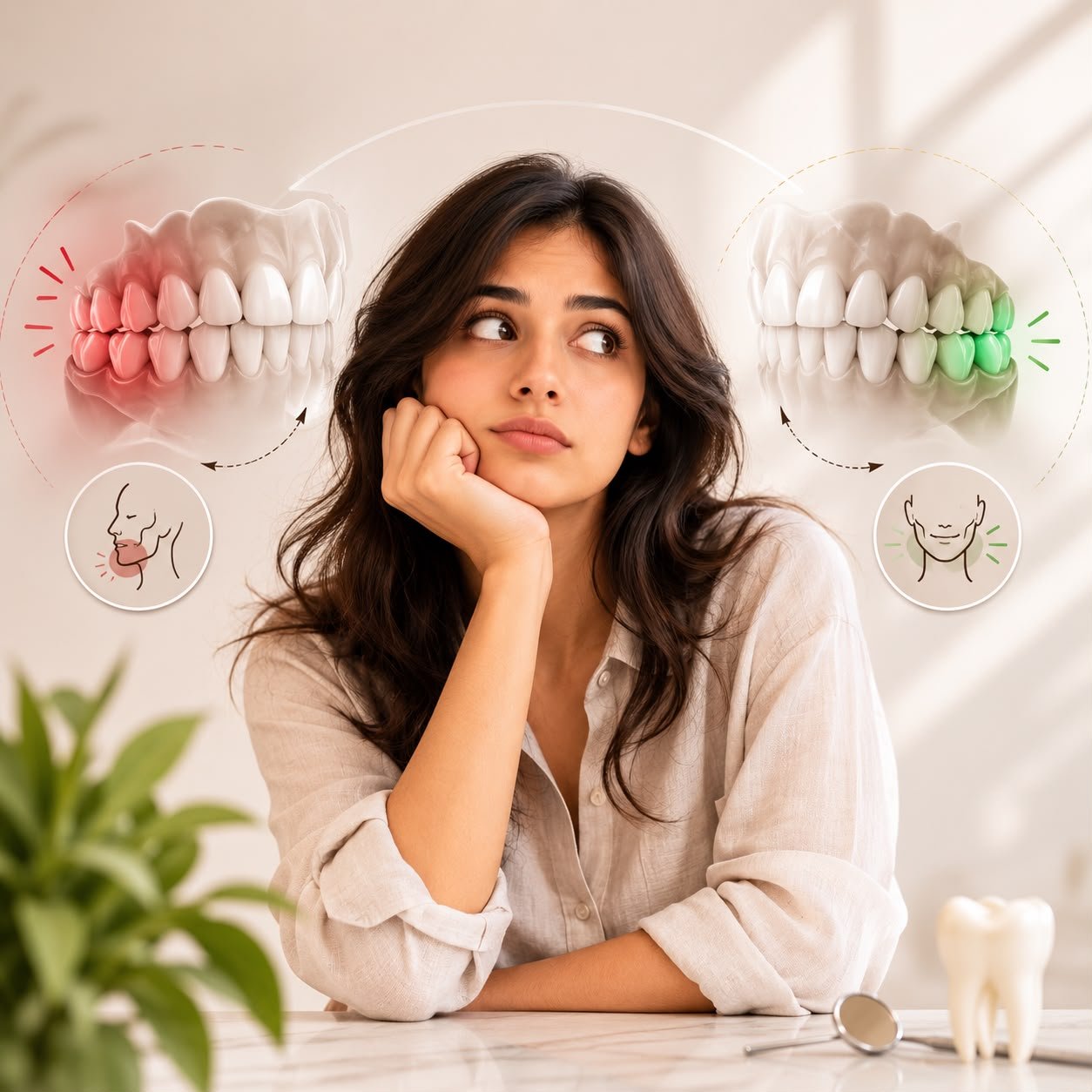
Chewing on one side is usually your body’s way of avoiding discomfort or adapting to a problem in the mouth.
Common reasons include:
- Tooth pain or sensitivity
- Cavities
- Broken or cracked teeth
- Loose fillings or crowns
- Gum infections
- Missing teeth
- Poorly fitting dentures
- Bite misalignment
- Jaw pain or TMJ disorders
- Habit developed over many years
If chewing on one side has become your routine, it’s worth finding out why.
Is One-Sided Chewing Harmful?
Yes. While chewing on one side occasionally is normal, doing it every day for months or years can lead to several dental problems.
Possible complications include:
- Faster wear of teeth on one side
- Extra pressure on the jaw joint
- Muscle fatigue and facial discomfort
- Uneven bite
- Tooth fractures
- Gum problems
- Difficulty chewing efficiently
The side that does most of the chewing experiences significantly more force than the other side.
How Does It Affect Your Jaw?

Your jaw works best when both sides function together.
If one side does all the work:
- Jaw muscles become imbalanced.
- One TMJ (temporomandibular joint) experiences greater stress.
- Clicking or popping sounds may develop.
- Headaches and facial pain may occur.
- Jaw stiffness can become more noticeable over time.
Early correction helps prevent long-term joint problems.
Can Missing Teeth Cause One-Sided Chewing?
Absolutely.
When a tooth is missing, many people naturally avoid chewing in that area because it feels uncomfortable or less effective.
Missing teeth can cause:
- Uneven chewing pressure
- Shifting of nearby teeth
- Bite changes
- Increased wear on healthy teeth
- Bone loss in the jaw
Replacing missing teeth with appropriate treatment helps restore balanced chewing.
How Dentists Diagnose the Cause
At Dentology by Dr. Sagar, we don’t simply treat the symptom—we identify the reason behind it.
Your examination may include:
- Clinical oral examination
- Digital dental X-rays
- Bite analysis
- Gum health evaluation
- TMJ assessment
- Checking old fillings, crowns, or restorations
Finding the root cause allows us to recommend the most suitable treatment.
Treatment Depends on the Cause
The right treatment varies from patient to patient.
Possible treatment options include:
- Tooth-coloured fillings for cavities
- Root canal treatment for infected teeth
- Dental crowns for weakened teeth
- Professional gum treatment
- Replacement of missing teeth with dental implants or bridges
- Bite correction
- TMJ management
- Orthodontic treatment if teeth are misaligned
Early treatment usually prevents more complex dental problems later.
Tips to Maintain Balanced Chewing
You can reduce uneven chewing by following these habits:
- Brush twice daily with fluoride toothpaste.
- Floss every day.
- Replace missing teeth promptly.
- Avoid ignoring tooth pain or sensitivity.
- Visit your dentist every six months.
- Avoid chewing extremely hard foods on one side.
- Report jaw clicking or discomfort early.
Small lifestyle changes can help maintain healthy teeth and balanced jaw function.
Trust Dentology by Dr. Sagar for Comprehensive Dental Care
At Dentology by Dr. Sagar, Model Town, Ludhiana, we believe every small habit can reveal important clues about your oral health. If you always chew from one side, let our experienced dental team identify the reason before it leads to bigger problems.
Whether you need preventive care, restorative dentistry, dental implants, crowns, smile designing, or bite correction, we provide personalised treatment using advanced technology and a patient-first approach.
Address: 225R, Model Town, Ludhiana
Call: +91 98786 46775
A balanced bite is essential for a healthy smile. If you’ve been chewing from only one side, schedule a dental check-up today and protect your teeth for the future.
Frequently Asked Questions
1. Why do I chew on only one side of my mouth?
You may chew on one side due to tooth pain, cavities, missing teeth, gum disease, bite problems, or simply because of a long-standing habit.
2. Is chewing on one side bad for my teeth?
Yes. Long-term one-sided chewing can cause uneven tooth wear, jaw pain, muscle strain, and bite problems.
3. Can a cavity make me chew on one side?
Yes. A cavity or tooth sensitivity can make chewing uncomfortable, causing you to avoid the affected side.
4. How can a dentist fix one-sided chewing?
Treatment depends on the cause and may include fillings, crowns, root canal treatment, dental implants, gum therapy, orthodontics, or bite adjustment.
5. When should I see a dentist for one-sided chewing?
If you consistently chew on one side, experience pain, jaw clicking, tooth sensitivity, or difficulty chewing, schedule a dental examination as soon as possible.