Hearing that you need a root canal can make you nervous, especially if you have heard that the procedure is painful. However, root canal treatment is a common dental procedure that helps remove infection from inside a tooth and save it when possible.
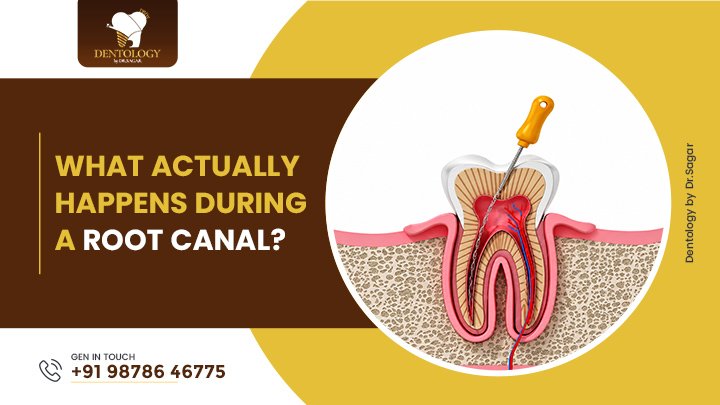
So, what happens during a root canal? The dentist removes the damaged tissue inside the tooth, cleans the affected area, and seals it to help prevent further infection. The tooth is then restored so you can continue using it for everyday activities.
Knowing what to expect can make the treatment feel less stressful.
Why Might You Need a Root Canal?
Inside each tooth is a soft tissue called the pulp, which contains nerves and blood vessels. When this tissue becomes infected or badly damaged, root canal treatment may be needed.
Some common reasons include:
- Deep tooth decay
- A cracked or damaged tooth
- An injury to the tooth
- Repeated dental procedures on the same tooth
You may notice a persistent toothache, sensitivity to hot or cold foods, pain while chewing, or swelling near the gums. Sometimes, a damaged tooth may not cause pain at all.
Your dentist will examine the tooth and may recommend a dental X-ray to understand the problem before suggesting treatment.
What Happens During a Root Canal?
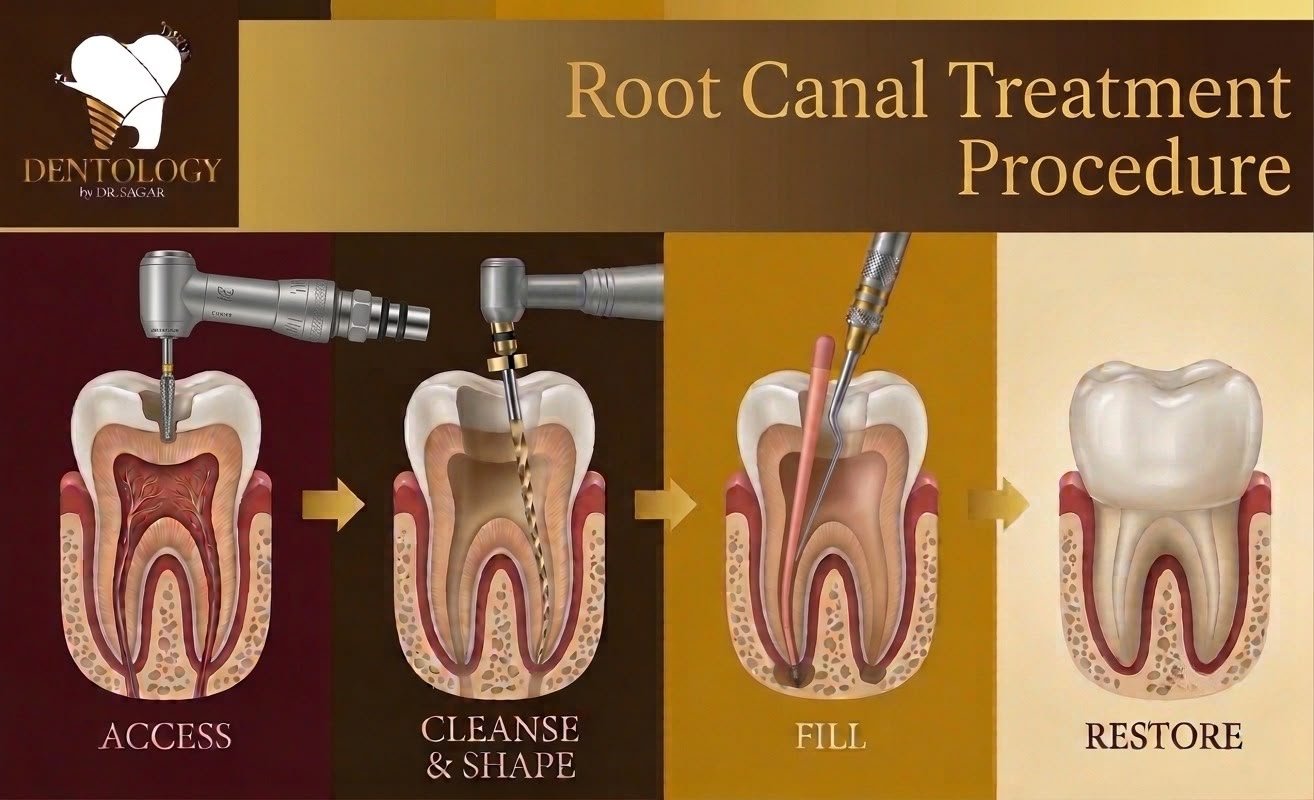
A root canal is usually completed in a few main steps. The exact process depends on the condition of your tooth.
1. Examining the Tooth
First, your dentist checks the affected tooth and asks about your symptoms. An X-ray may be taken to help identify the problem and decide whether the tooth can be saved.
2. Making the Tooth Numb
The dentist uses local anaesthesia to numb the area before starting. You remain awake during the procedure, but the treatment area should feel numb.
If you feel discomfort during treatment, let your dentist know so they can help make you more comfortable.
3. Cleaning the Inside of the Tooth
The dentist makes a small opening in the tooth to reach the damaged tissue inside. The affected tissue is removed, and the inside of the tooth is carefully cleaned to reduce bacteria and infection.
You do not need to remember the technical details. The main aim is to remove the source of the problem and prepare the tooth for sealing.
4. Sealing the Tooth
After cleaning, the dentist fills and seals the inside of the tooth to help prevent bacteria from entering again. A temporary or permanent filling may be placed, depending on your treatment plan.
5. Protecting the Tooth
Once the root canal is complete, the tooth may need a permanent filling or a dental crown. A crown is often recommended when the tooth has lost a significant amount of its strength.
Is a Root Canal Painful?
Pain is one of the biggest concerns people have before a root canal. With appropriate local anaesthesia, most patients tolerate the procedure well. The treatment is intended to address the source of pain caused by an infected or inflamed tooth.
Some tenderness or mild discomfort may occur for a few days afterwards. This usually improves as the area heals.
If you experience severe pain, increasing swelling, or symptoms that do not improve, contact your dentist for advice.
How Long Does a Root Canal Take?
The time needed depends on which tooth is being treated and how complicated the problem is. Some root canals can be completed in one appointment, while others require more than one visit.
Your dentist will explain how many appointments you may need after examining your tooth.
What Should You Do After a Root Canal?
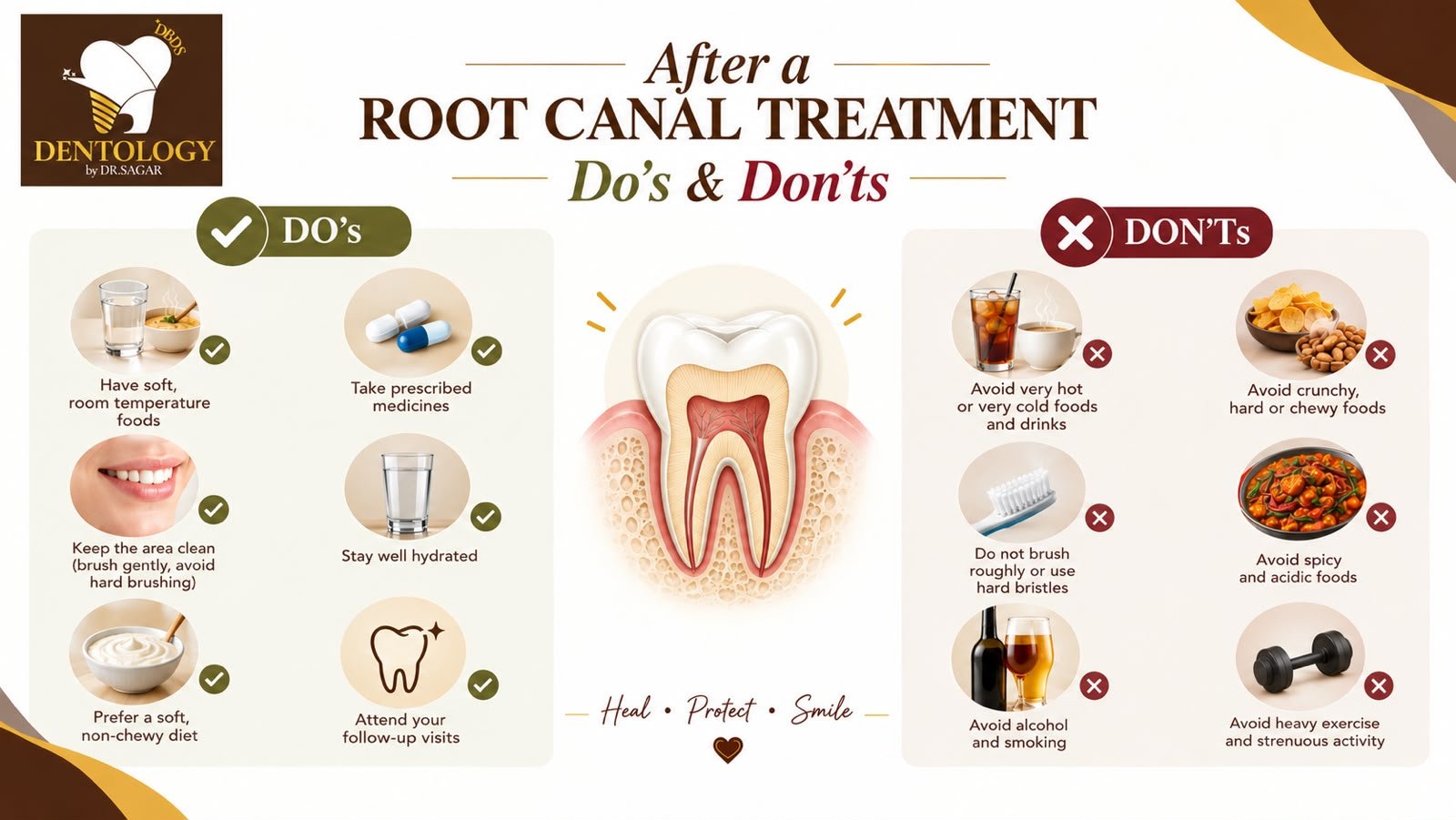
Taking care of your tooth after treatment helps support recovery and protect it from further damage.
- Avoid chewing hard foods on the treated tooth until your dentist says it is safe.
- Choose softer foods if your tooth feels tender.
- Brush and floss gently as usual.
- Follow your dentist’s instructions about medication.
- Attend any recommended follow-up appointments.
- Get your permanent filling or crown completed as advised.
If your temporary filling falls out or you notice new pain or swelling, contact your dentist rather than ignoring the problem.
Can a Root Canal Save Your Natural Tooth?
Yes. Root canal treatment can help preserve a natural tooth that might otherwise need to be removed. With appropriate treatment, a suitable final restoration, and regular dental care, the tooth may continue to function for many years.
However, the outcome depends on how much healthy tooth remains and the extent of the damage. Your dentist will assess whether the tooth can be restored successfully.
When Should You Visit a Dentist?
Do not ignore a toothache that continues, sensitivity that lingers, pain while chewing, gum swelling, or a tooth that changes colour. These symptoms can have different causes, and a dental examination is needed to determine the right treatment.
Early assessment can help identify the problem and prevent it from becoming more complicated.
If you are experiencing dental pain, Dentology by Dr. Sagar can examine your tooth and explain the treatment options available to you.
Book Your Dental Consultation in Ludhiana
Tooth pain can affect eating, sleeping, and everyday life. Getting the right advice early can help you understand the cause and choose a suitable treatment.
For a dental assessment, contact Dentology by Dr. Sagar, led by Dr. Sagar Sachdeva, Prosthodontist and Dental Implantologist.
Call: +91 98786 46775
Frequently Asked Questions
1. What actually happens during a root canal?
During a root canal, the dentist removes damaged tissue from inside the tooth, cleans the affected area, and seals it. A filling or crown may then be used to restore and protect the tooth.
2. How many appointments are needed for a root canal?
Some root canals can be completed in one appointment, while others require two or more visits. It depends on the condition of the tooth and the treatment required.
3. Will I feel pain during a root canal?
The dentist uses local anaesthesia to numb the treatment area. Most patients tolerate the procedure well, although mild tenderness may occur afterwards.
4. How long does recovery take after a root canal?
Some tenderness may last for a few days. If pain becomes severe, swelling develops, or symptoms get worse, contact your dentist.
5. Do I always need a crown after a root canal?
No. Some teeth can be restored with a filling, while others need a crown for additional protection. Your dentist will recommend the right option based on the condition of the tooth.
6. Can a root canal save a badly damaged tooth?
It may be possible if the tooth can still be restored. However, a severely fractured tooth or one with too little healthy structure may need a different treatment.
7. What happens if I delay a needed root canal?
If the tooth has an infection or serious pulp damage, delaying treatment may allow the problem to worsen. This can lead to more pain, swelling, or an abscess. Arrange a dental examination if you have ongoing symptoms.