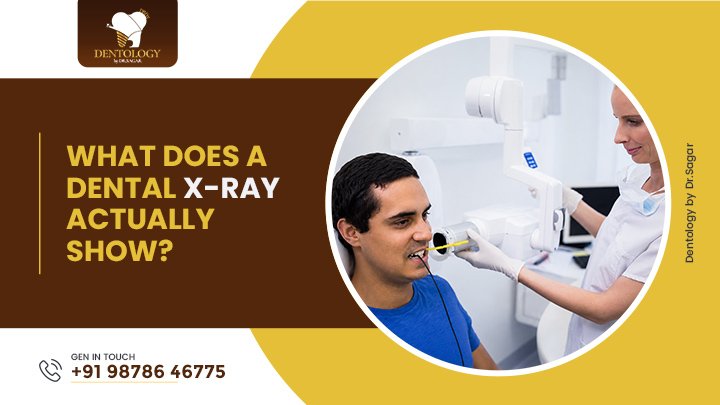
When a dentist recommends a dental X-ray, many patients wonder why it is necessary when their teeth look perfectly fine. The reason is simple: a dental examination can only show what is visible, while an X-ray can reveal what is happening beneath the surface.
Dental X-rays help dentists identify problems that may not be visible during a routine examination, including cavities between teeth, infections around tooth roots, bone loss, and other hidden conditions.
At Dentology by Dr. Sagar, Ludhiana, dental X-rays are used when clinically appropriate to improve diagnosis and help create a more accurate treatment plan.
Why Do Dentists Need Dental X-Rays?
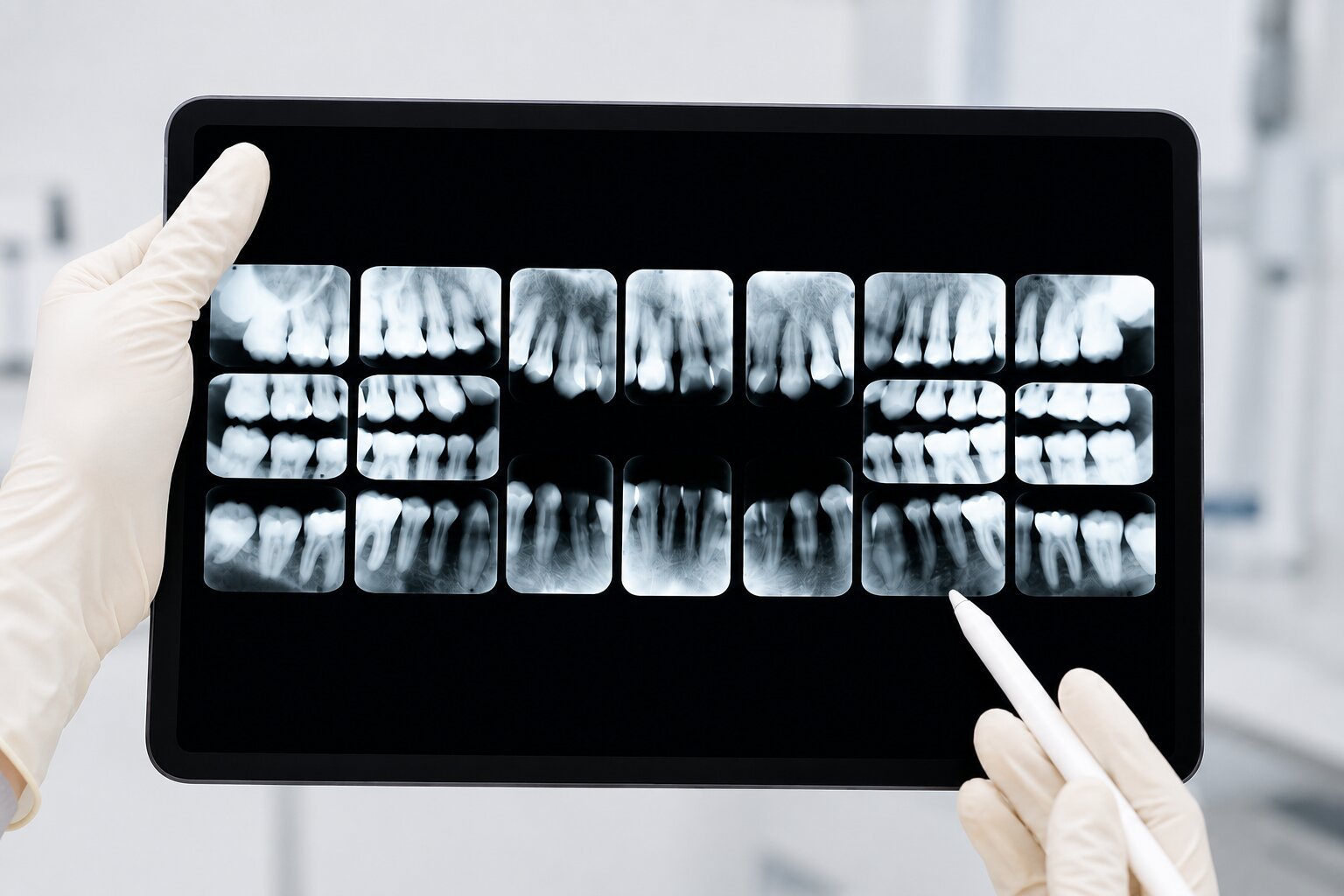
Your mouth contains structures that cannot be fully evaluated just by looking inside it. An X-ray provides a different view of your teeth, roots, surrounding bone, and other oral structures.
Depending on the type of X-ray, your dentist may be able to identify:
- Cavities between teeth
- Tooth decay beneath existing restorations
- Infections around tooth roots
- Bone loss associated with gum disease
- Impacted or developing teeth
- Problems involving tooth roots
- Certain developmental abnormalities
The FDA and ADA recommend that dental radiographs be selected based on the patient’s individual oral health, age, disease risk, and clinical findings rather than following one fixed schedule for everyone.
What Can a Bitewing X-Ray Show?
A bitewing X-ray focuses mainly on the crowns of the upper and lower teeth and the bone levels between them.
It is especially useful for detecting cavities between teeth, where a visual examination may not provide enough information.
This type of X-ray can also help dentists assess bone levels and monitor areas that may be difficult to inspect directly.
What Can a Periapical X-Ray Show?
A periapical X-ray captures an entire tooth, including its crown, root, and the surrounding bone.
It can help your dentist investigate:
- Root infections
- Abscesses
- Deep decay
- Changes around the root
- Bone abnormalities
- Dental trauma
This type of imaging can be particularly important when a patient has unexplained tooth pain or when root canal treatment is being considered.
What Does a Panoramic Dental X-Ray Show?
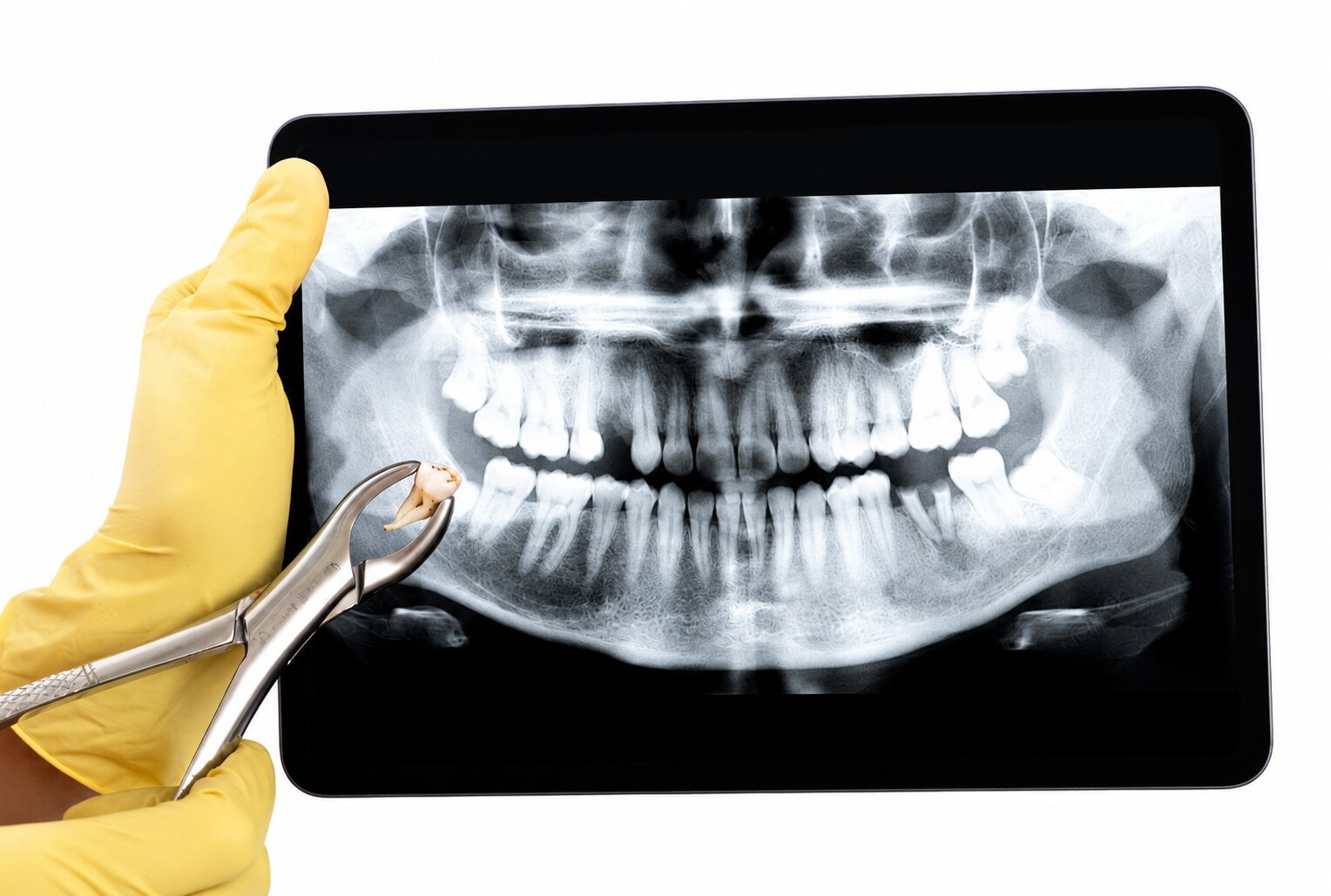
A panoramic X-ray provides a broad view of the teeth and jaws in a single image.
It can help dentists evaluate the overall position of teeth, impacted wisdom teeth, jaw structures, and other conditions that may require a wider field of view.
Panoramic imaging can be particularly useful when planning certain orthodontic, surgical, or restorative procedures.
Can an X-Ray Show Gum Disease?
An X-ray cannot show gum inflammation in the same way a clinical examination can, but it can provide important information about the bone supporting your teeth.
Bone loss can be an important sign of periodontal disease and can help your dentist understand the severity and pattern of the condition.
That is why an X-ray is often considered alongside gum measurements and a clinical examination rather than being used by itself.
Does a Dental X-Ray Mean Something Is Wrong?
Not necessarily.
Your dentist may recommend an X-ray as part of diagnosis, treatment planning, or monitoring. Sometimes the result confirms that an area is healthy. Other times, it reveals a problem before symptoms become noticeable.
The purpose is not simply to look for disease. It is to obtain information that cannot be reliably gathered through a visual examination alone.
Are Dental X-Rays Safe?
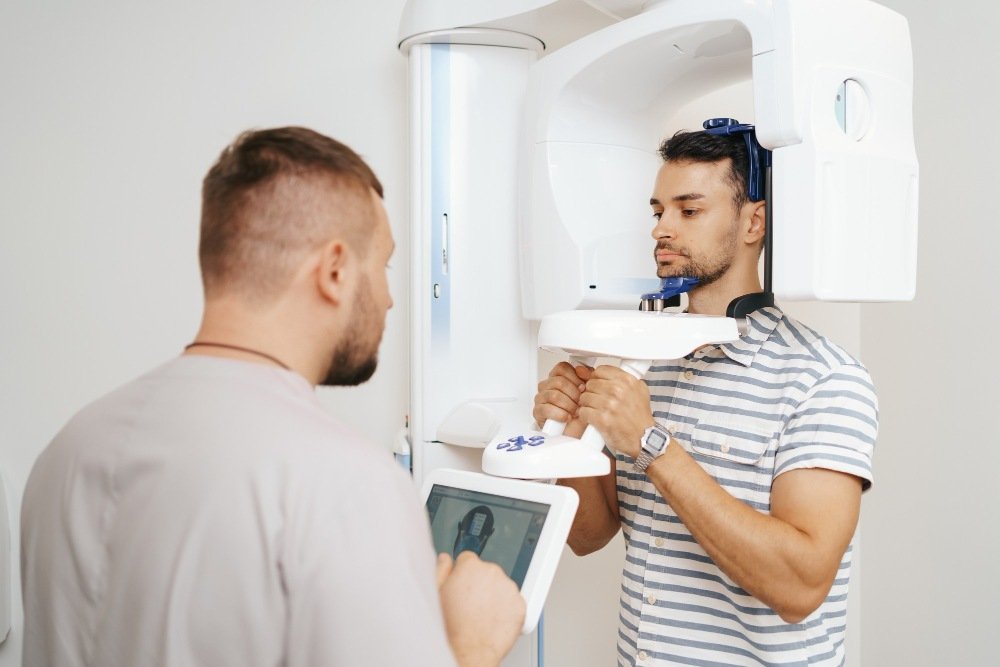
Dental X-rays use ionizing radiation, so they should be taken only when clinically justified. Modern dental imaging uses relatively small radiation doses, and the FDA states that the clinical benefit of an appropriately indicated X-ray examination outweighs the small radiation risk.
The frequency of X-rays should therefore be based on your individual dental needs rather than automatically taking them at the same interval for every patient.
Dental X-Rays at Dentology by Dr. Sagar
At Dentology by Dr. Sagar, Model Town, Ludhiana, we combine clinical examination with appropriate diagnostic imaging when needed. This helps us understand the condition of your teeth and supporting structures more accurately and develop a personalised treatment plan.
Whether you need preventive care, fillings, root canal treatment, crowns, dental implants, or gum treatment, accurate diagnosis is the foundation of good dental care.
An X-ray may look like a simple image, but it can reveal important details that your eyes cannot see. The right diagnosis today can help prevent bigger dental problems tomorrow.
Frequently Asked Questions
What can a dental X-ray detect?
Dental X-rays can help detect cavities, infections, bone loss, impacted teeth, root problems, and other conditions that may not be visible during a routine dental examination.
Can a dental X-ray show a cavity?
Yes. Certain dental X-rays, particularly bitewing images, can help detect cavities between teeth that may be difficult to see during a visual examination.
Can an X-ray show a tooth infection?
Yes. An X-ray can help dentists identify changes around the root of a tooth that may be associated with infection or an abscess.
Do I need a dental X-ray at every appointment?
Not necessarily. X-ray frequency should be based on factors such as your oral health, age, disease risk, symptoms, and previous findings. There is no single schedule that applies to every patient.
Are dental X-rays safe?
When clinically necessary and performed appropriately, dental X-rays involve a small radiation risk, and the diagnostic benefits generally outweigh that risk.