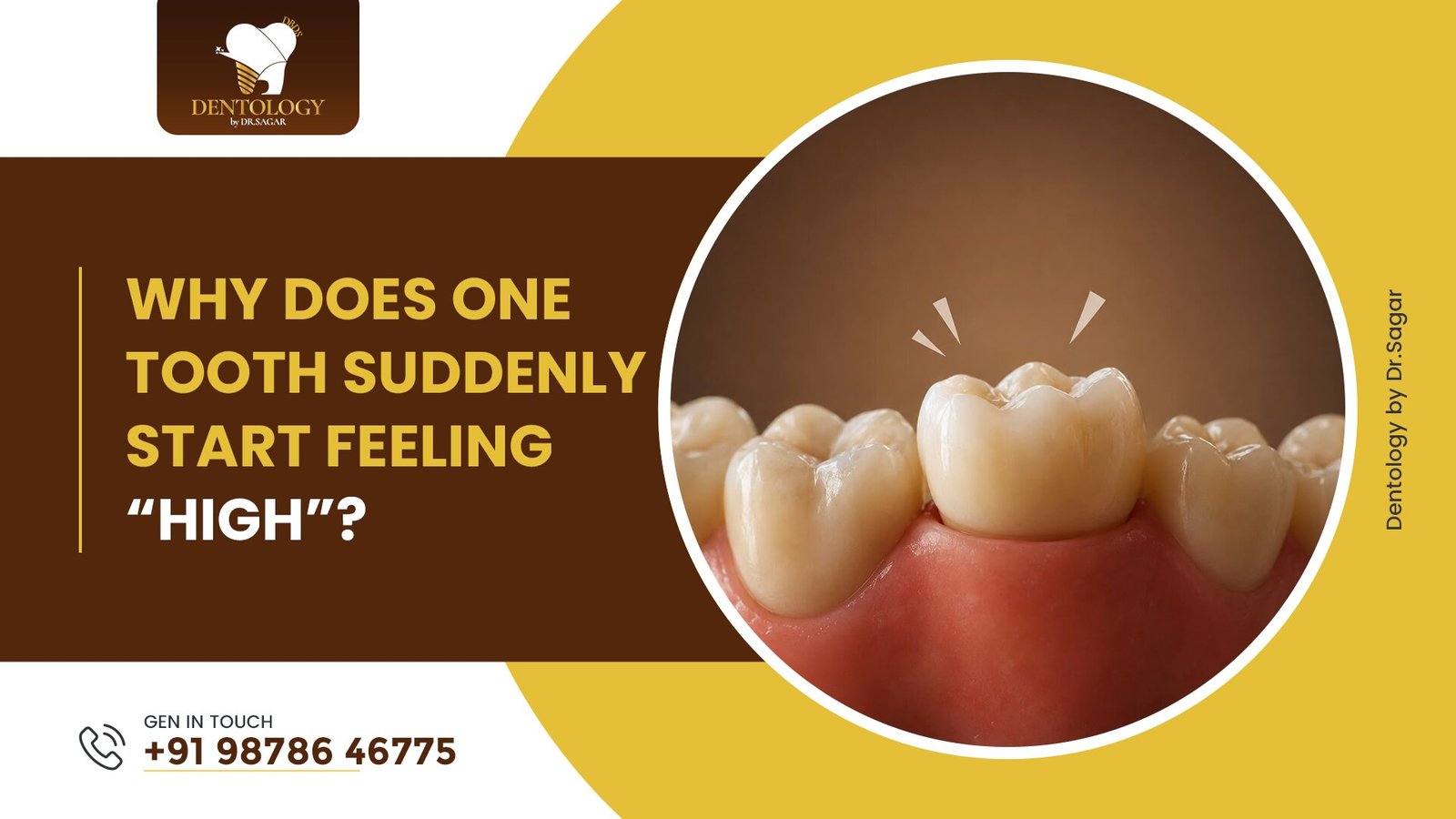
Have you ever bitten down and suddenly felt like one tooth is hitting before all the others? It may feel as though the tooth has become taller, swollen, or slightly out of position. Sometimes this sensation appears suddenly, even though nothing looks different in the mirror.
A tooth that feels “high” should not always be ignored. It can be caused by something as simple as an uneven bite or recent dental work, but it can also be associated with inflammation, infection, grinding, or damage around the tooth.
At Dentology by Dr. Sagar, Ludhiana, we evaluate these symptoms carefully to identify the underlying cause rather than simply treating the discomfort.
What Does a “High” Tooth Feel Like?
A high tooth usually feels different when you bite your teeth together.
You may notice:
- One tooth touches before the others
- Pressure or discomfort when biting
- Pain when chewing
- A feeling that the tooth is slightly taller
- Tenderness around the tooth
- Discomfort that becomes more noticeable when eating
The tooth may look completely normal even though it feels different.
Why Can One Tooth Suddenly Feel High?
There are several possible reasons.
1. Inflammation Around the Tooth
Inflammation around the root or supporting tissues can make a tooth feel unusually prominent when you bite.
This can happen because of:
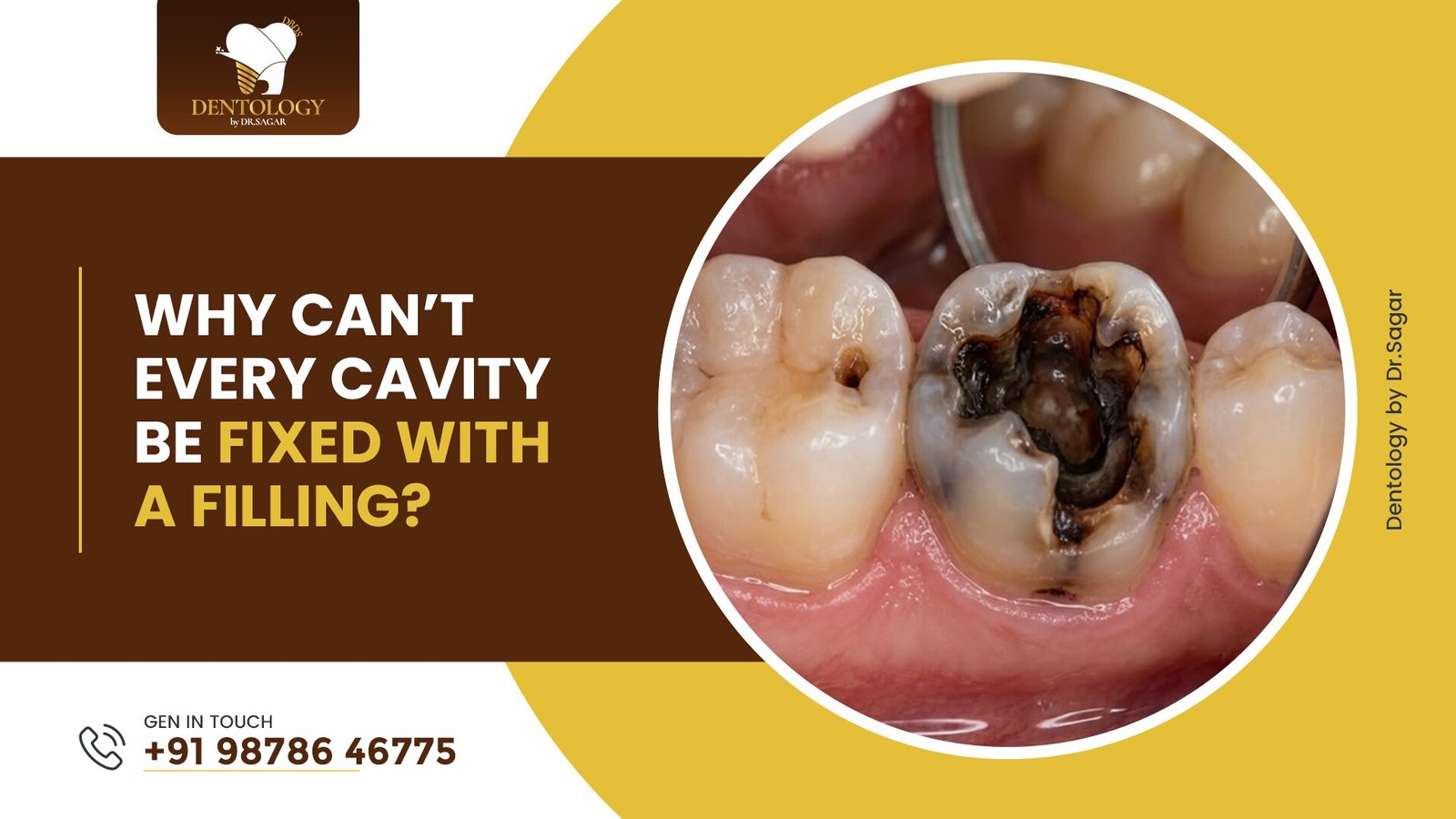
- Deep tooth decay
- Dental infection
- Trauma
- Inflammation inside the tooth
When the tissues surrounding the tooth become inflamed, even normal biting pressure may feel uncomfortable.
2. A Recent Dental Filling or Crown
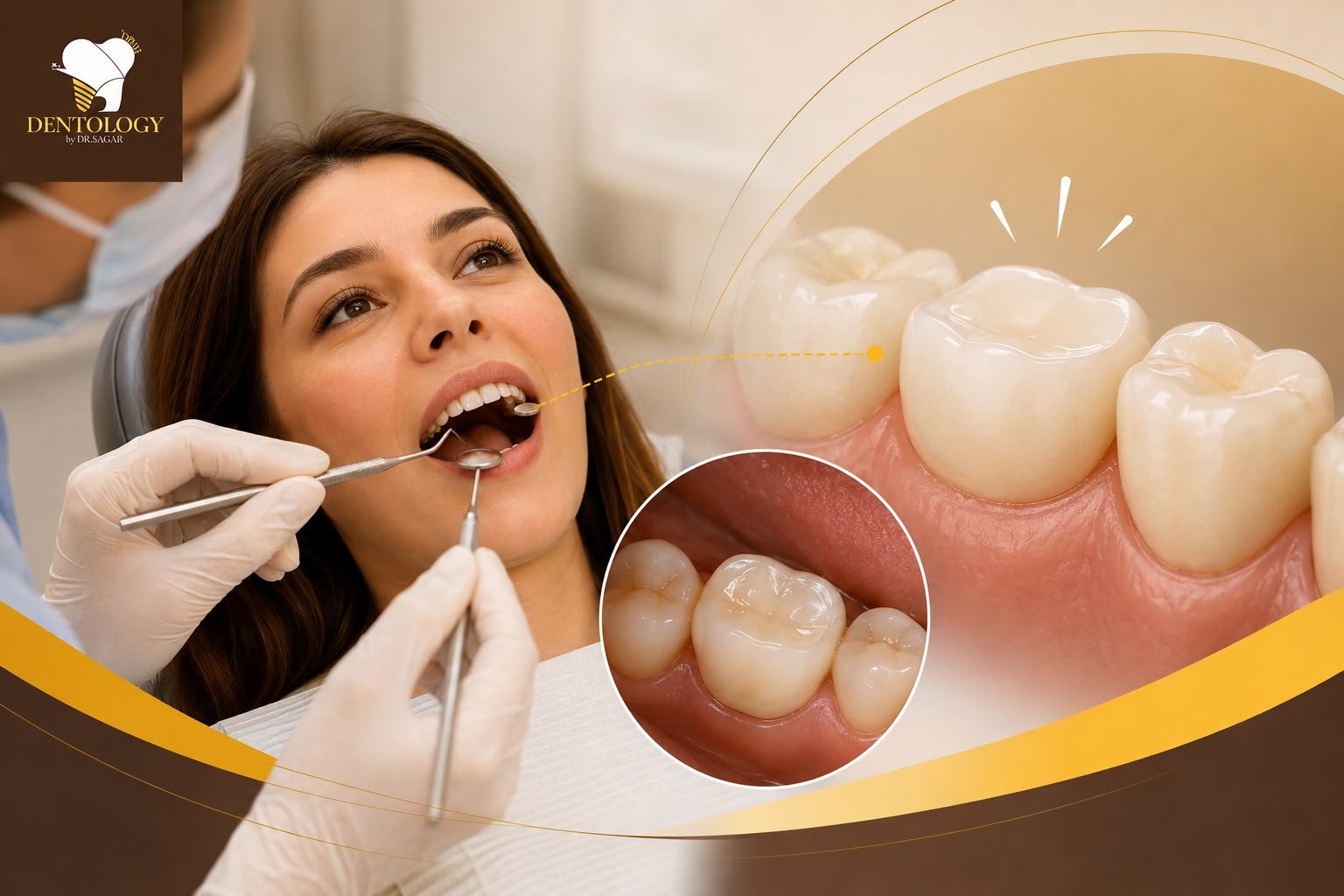
If you recently had a filling or crown, the restoration may be slightly higher than your natural bite.
You may notice that the treated tooth touches first when you close your mouth.
A dentist can check your bite and make a small adjustment if necessary. Do not try to adjust the restoration yourself.
3. Teeth Grinding or Clenching
Night-time grinding and daytime clenching can put excessive pressure on individual teeth.
Over time, this may cause:
- Tooth sensitivity
- Jaw discomfort
- Tooth wear
- Cracks
- Pain while biting
If you regularly wake up with jaw stiffness or headaches, discuss possible bruxism with your dentist.
4. A Cracked or Damaged Tooth
A cracked tooth can sometimes create an unusual biting sensation.
You may experience pain when biting down or releasing the bite, especially when eating harder foods.
Because cracks can worsen over time, persistent biting discomfort should be professionally evaluated.
5. Infection or Abscess
A dental infection can cause inflammation around the root and make the tooth feel different when biting.
Other warning signs may include:
- Persistent toothache
- Swelling
- Gum tenderness
- Bad taste
- Sensitivity
- Fever
A dental examination and appropriate X-ray may be needed to determine whether an infection is present.
Why Does It Hurt When You Bite?
When the tissues around a tooth become inflamed, biting places pressure on those tissues. This can make the tooth feel unusually sensitive or “high.”
The important point is that the tooth may not actually have moved or grown. The sensation can result from inflammation around it.
When Should You See a Dentist?
Make a dental appointment if the sensation:
- Appears suddenly without an obvious reason
- Continues for more than a few days
- Causes pain while chewing
- Gets progressively worse
- Is accompanied by swelling
- Follows dental treatment
- Comes with sensitivity or persistent toothache
Prompt evaluation can help identify the cause before the problem becomes more complicated.
How Is a High Tooth Treated?
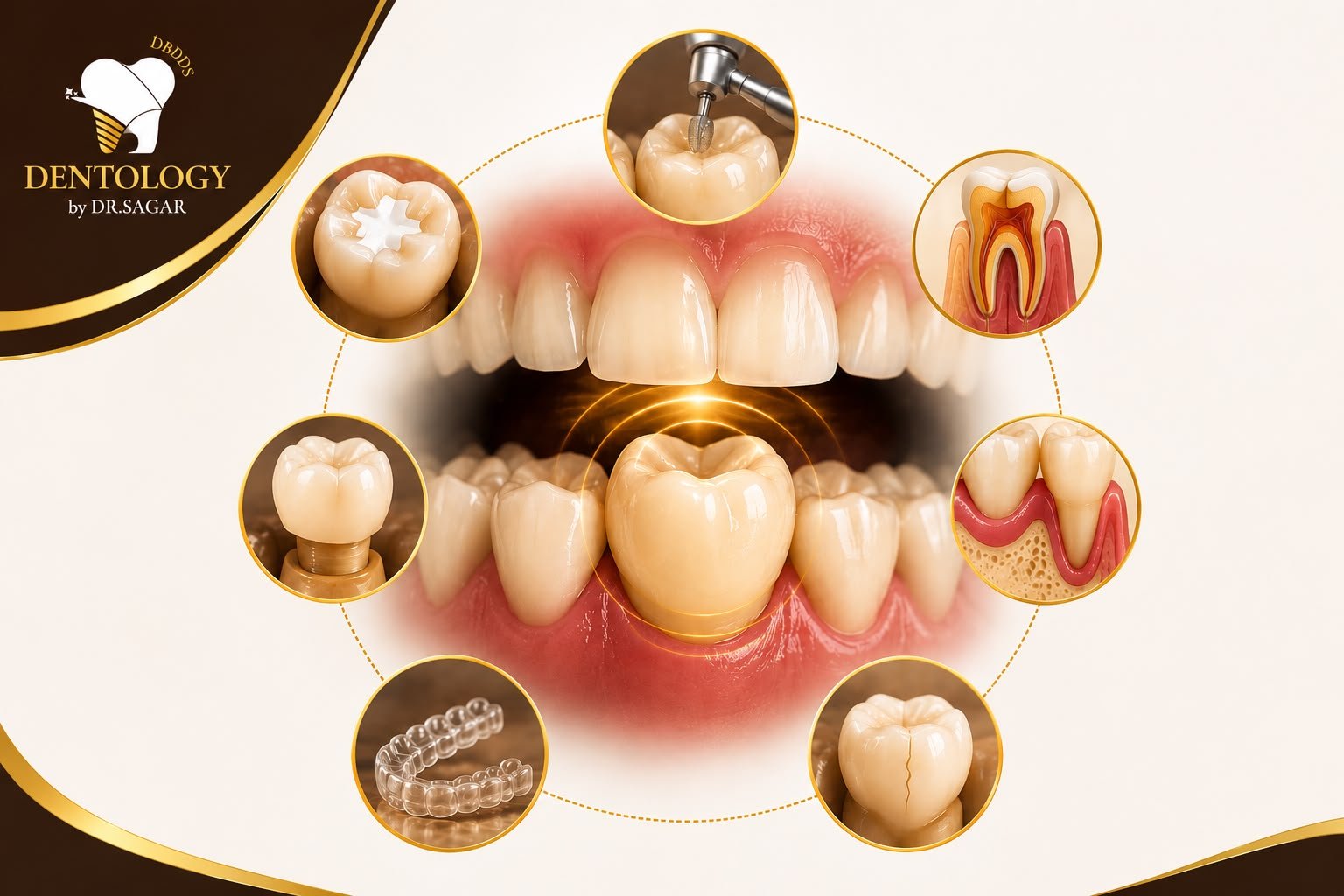
Treatment depends entirely on the underlying cause.
Your dentist may recommend:
- Bite adjustment after a filling or crown
- Treatment for tooth decay
- Root canal treatment if the nerve is infected
- A crown to protect a damaged tooth
- Treatment for gum or supporting tissue problems
- A night guard for teeth grinding
- Further investigation for a cracked tooth
The goal is to restore comfortable and balanced biting while preserving as much natural tooth structure as possible.
Can You Fix a High Tooth at Home?
There is no safe home method for permanently correcting a tooth that feels high.
Until you are examined, you can avoid chewing hard foods on the affected side and maintain normal oral hygiene. Avoid repeatedly biting down to “test” the tooth because this may increase irritation.
Expert Dental Care at Dentology by Dr. Sagar
At Dentology by Sagar, we carefully evaluate changes in your bite, tooth sensitivity, chewing discomfort, and other symptoms. Using clinical examination and appropriate diagnostic imaging, we work to identify the cause and recommend personalised treatment.
Whether you need a filling adjustment, root canal treatment, crown, night guard, or other restorative care, our focus is on keeping your natural teeth healthy and functional.
📞 Call: +91 98786 46775
If one tooth suddenly feels “high,” don’t ignore the change. A simple dental examination can help determine whether it is a bite issue, inflammation, grinding, or something that requires treatment.
Frequently Asked Questions
Why does one tooth suddenly feel higher than the others?
A tooth may feel high because of inflammation, a recent filling or crown, teeth grinding, a cracked tooth, or an infection around the root.
Can a cavity make a tooth feel high?
Yes. Deep decay can irritate the tissues inside and around a tooth, sometimes causing discomfort when biting.
Why does my tooth feel high after a filling?
The filling may slightly interfere with your natural bite. If the tooth consistently hits first, your dentist can check and adjust the filling.
Does a high tooth always mean I need a root canal?
No. A high tooth can have many causes. Root canal treatment is only considered when the dental nerve is significantly inflamed or infected.
When should I see a dentist for a high tooth?
If the sensation persists, causes pain while biting, or occurs with swelling, sensitivity, or toothache, arrange a dental examination promptly.