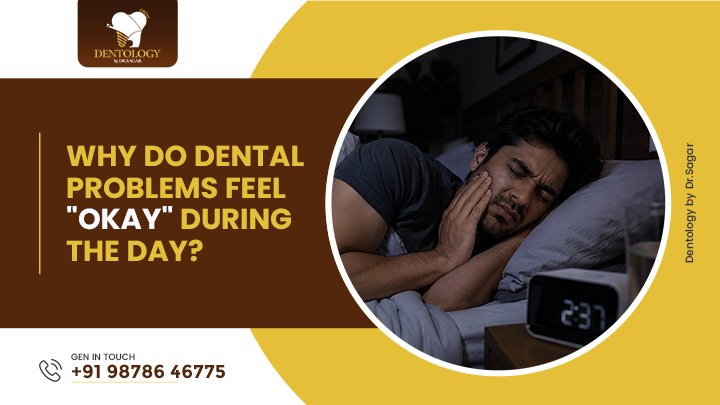
Have you ever noticed a tooth that feels completely fine during the day but starts hurting at night or when you are resting? Or perhaps you have a dental problem that seems to disappear while you are busy, only to become noticeable when you finally slow down.
This can be confusing. If your tooth does not hurt all day, does it really need treatment?
The answer is often yes. Dental problems do not always cause constant pain. In many cases, symptoms can come and go depending on pressure, temperature, inflammation, stress, and even how much attention you are paying to your body.
At Dentology by Dr. Sagar, Ludhiana, we help patients understand why dental symptoms can be unpredictable and why occasional discomfort should not always be ignored.
Why Can a Dental Problem Feel Fine During the Day?
Many dental conditions develop gradually. The nerves inside and around your teeth may not be irritated continuously, so you may experience periods when everything feels normal.
During the day, you may also be busy with work, conversations, travel, or other activities. Your attention is focused elsewhere, so mild discomfort may be less noticeable.
However, when you become relaxed or quiet, you may suddenly become more aware of a sensation that was already present.
This does not necessarily mean the dental problem has disappeared. It may simply mean you are noticing it less.
Does Tooth Pain Always Mean Something Is Seriously Wrong?
Not always. Mild and occasional discomfort can have several causes, including:
- Early tooth decay
- Tooth sensitivity
- A small crack in the tooth
- A loose or damaged filling
- Gum inflammation
- Teeth grinding or clenching
- An uneven bite
However, the intensity of pain does not always match the severity of the underlying problem.
A tooth with significant damage may sometimes cause little or no pain, while a relatively minor issue can feel extremely uncomfortable.
That is why a professional dental examination is important when symptoms continue or repeatedly return.
Why Does Tooth Pain Sometimes Get Worse at Night?

Some people notice dental pain more strongly at night. There can be several reasons for this.
When you lie down, changes in blood flow and pressure around inflamed tissues may make discomfort more noticeable. You may also have fewer distractions, making you more aware of pain.
Night-time teeth grinding or clenching can also place additional pressure on teeth and jaw muscles.
If you regularly wake up with:
- Jaw stiffness
- Headaches
- Tooth sensitivity
- Sore facial muscles
- A painful tooth
it may be worth discussing your symptoms with your dentist.
Can a Tooth Problem Exist Without Pain?
Yes. This is one of the most important things to understand about dental health.
Cavities, gum disease, cracked teeth, and infections can sometimes develop without causing obvious pain in the early stages.
For example, a cavity may slowly progress before reaching the sensitive inner part of the tooth. Similarly, gum disease can develop gradually without causing severe discomfort.
This is why regular dental check-ups are important, even when your teeth feel perfectly fine.
Why Does Pain Sometimes Come and Go?
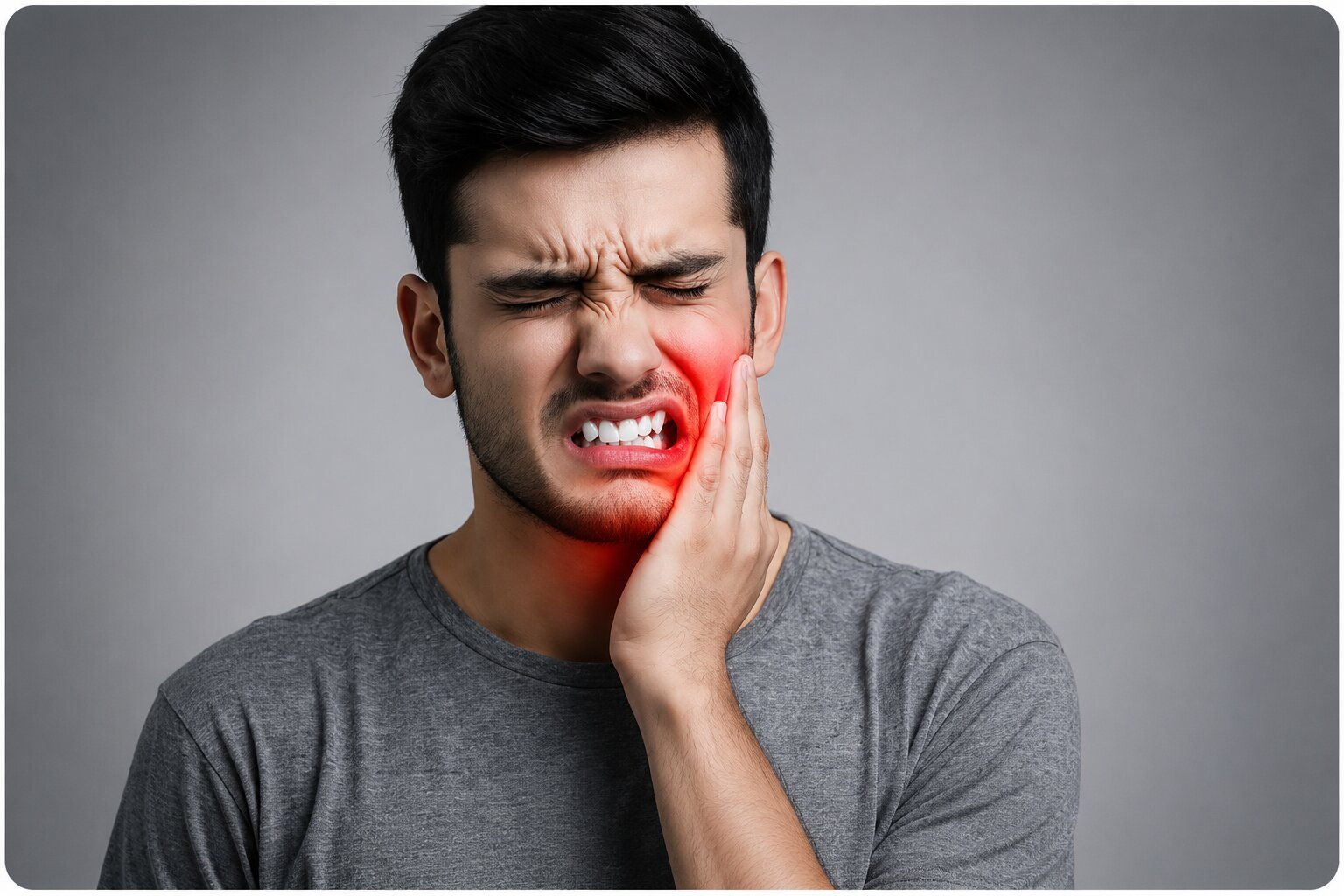
Pain that comes and goes can happen when the tooth is reacting to specific triggers.
You may notice discomfort when:
- Eating something cold or hot
- Biting or chewing
- Eating sweets
- Clenching your teeth
- Lying down
- Drinking acidic beverages
The fact that the pain disappears does not necessarily mean the underlying cause has healed.
In some cases, intermittent symptoms can be an early warning that a tooth needs attention.
When Should You Visit a Dentist?
You should consider a dental examination if you experience recurring or unexplained symptoms, especially if they are becoming more frequent.
Seek professional advice if you notice:
- Repeated tooth pain
- Sensitivity that does not improve
- Pain while biting
- Swelling around the tooth or gums
- A chipped or cracked tooth
- A loose filling or crown
- Bad taste or persistent bad breath
- Pain that wakes you during sleep
Early diagnosis can often make treatment simpler and help preserve your natural tooth.
Do Not Wait for Dental Pain to Become Severe
One of the biggest misconceptions about dental problems is that you only need to visit a dentist when something hurts badly.
In reality, some of the most important dental conditions may initially produce mild, occasional, or no symptoms at all.
If a tooth feels “okay” during the day but repeatedly bothers you at other times, it is worth finding out why. Early professional evaluation can help identify the cause before the problem becomes more complicated.
Expert Dental Care at Dentology by Dr. Sagar, Ludhiana
At Dentology by Dr. Sagar, Model Town, Ludhiana, we believe in identifying dental problems early and providing personalised treatment based on each patient’s needs. From preventive dental care and fillings to crowns, root canal treatment, dental implants, and restorative dentistry, our focus is on protecting your natural teeth and long-term oral health.
📞 Call: +91 98786 46775
If a dental problem keeps coming and going, do not wait until the pain becomes severe. Schedule a dental consultation and find out what your teeth may be trying to tell you.
Frequently Asked Questions
Why does my tooth feel fine during the day but hurt at night?
Dental pain may become more noticeable at night because there are fewer distractions, you are lying down, or you may be grinding or clenching your teeth during sleep.
Can a tooth be infected without severe pain?
Yes. Some dental infections may initially cause mild symptoms or no obvious pain. Regular dental examinations can help detect problems early.
Is occasional tooth pain a reason to visit a dentist?
Yes. Repeated or unexplained tooth pain should be evaluated, even if it disappears on its own.
Why does my tooth hurt only when I bite?
Pain while biting can sometimes be associated with a cracked tooth, dental infection, a high filling, or inflammation around the tooth. A dental examination is recommended to identify the cause.
Can dental problems heal on their own?
Some minor irritation may improve, but problems such as cavities, cracked teeth, and dental infections generally require professional evaluation and treatment.