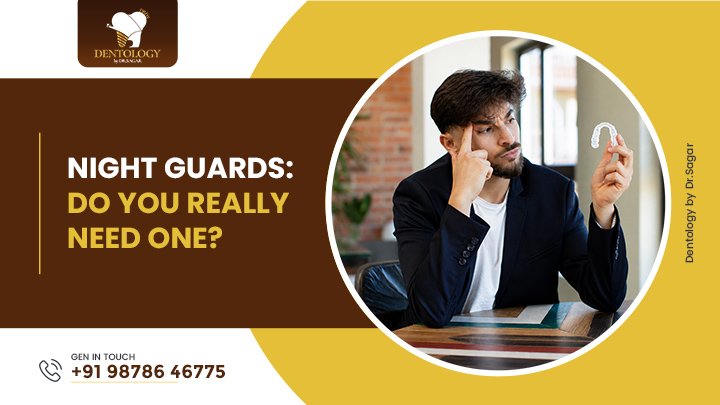
If you’ve ever woken up with a dull headache, a sore jaw, or teeth that feel oddly sensitive for no clear reason, a night guard might be the missing piece of your oral health routine. Many people grind or clench their teeth while they sleep without ever realizing it, and the damage builds up slowly, night after night, until it becomes hard to ignore. Here’s what night guards actually do, who needs one, and how to know if it’s time to ask your dentist about getting fitted for one.
What Is a Night Guard?
A night guard is an oral appliance worn over your teeth while you sleep to prevent grinding damage.
- Creates a protective barrier between your upper and lower teeth
- Custom-made guards are molded to your exact bite
- More comfortable, durable, and effective than store-bought versions
- Actually stops the grinding motion, rather than just cushioning it
What Is Bruxism, and Why Does It Happen?
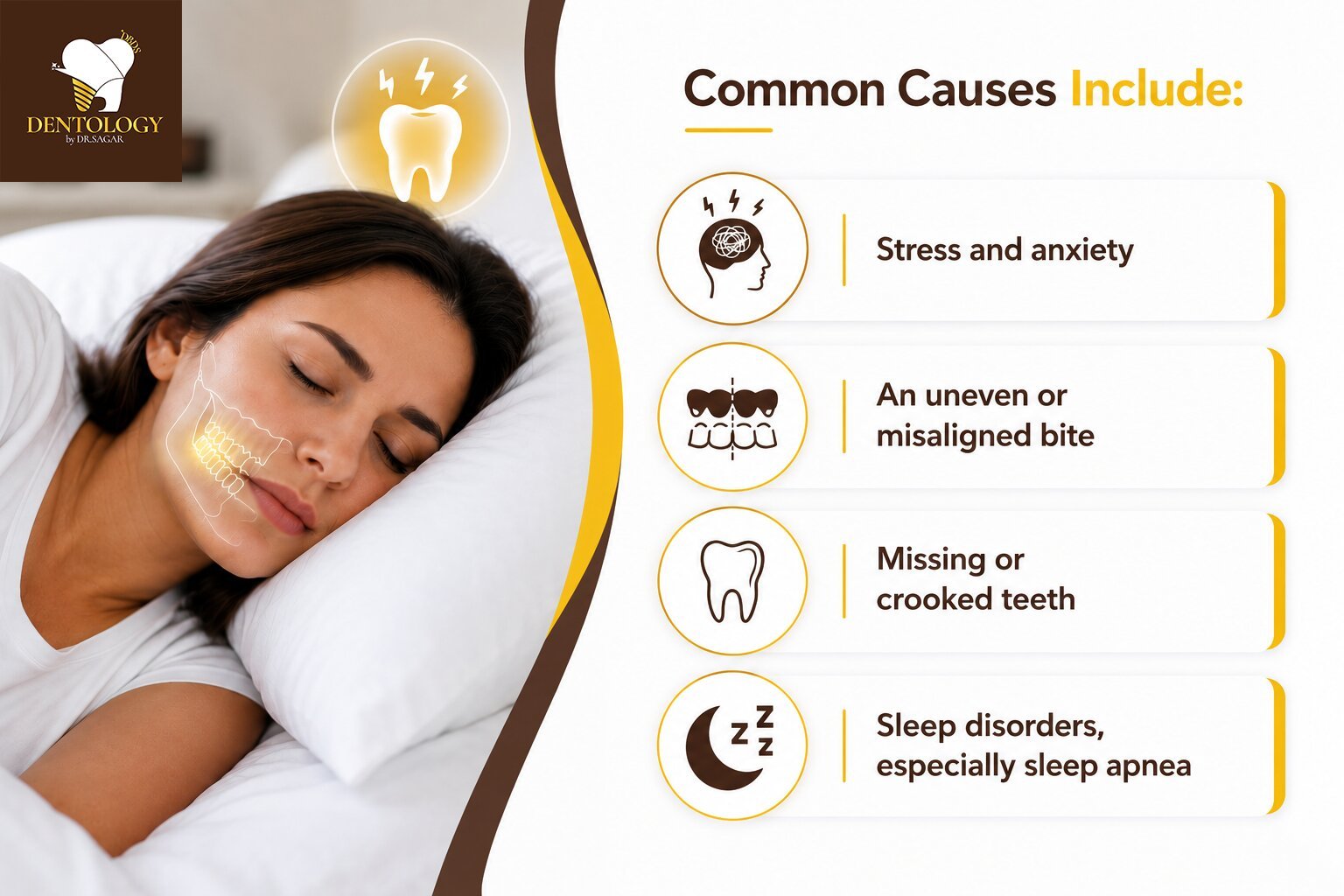
Bruxism is the medical term for teeth grinding and clenching, and it’s more common than most people think. Common causes include:
- Stress and anxiety
- An uneven or misaligned bite
- Missing or crooked teeth
- Sleep disorders, especially sleep apnea
It usually happens unconsciously during sleep, so many people go months or even years without knowing they’re doing it. Often, it’s a dentist who spots the first signs, simply by noticing unusual wear patterns during a routine check-up.
Signs You Might Need a Night Guard
You don’t need a sleep study to suspect bruxism. Watch out for:
- A sore or tight jaw when you wake up
- A dull headache near your temples in the morning
- Teeth that feel more sensitive to hot or cold than usual
- A partner mentioning grinding noises at night
- Flattened, chipped, or cracked teeth over time
- A clicking or popping sensation in the jaw joint
If more than one of these sounds familiar, it’s worth getting your bite evaluated.
The Real Cost of Ignoring It
Bruxism doesn’t just cause discomfort-it causes measurable, often expensive damage over time:
- Worn-down enamel and flattened tooth surfaces
- Fractured or cracked teeth
- Loosened fillings and crowns
- Chronic jaw pain or TMJ strain
- In advanced cases, subtle changes in facial muscle shape
A night guard is a small, one-time investment compared to the cost of root canals, crowns, or jaw treatment later on.
Who Should Get One
Night guards aren’t just for people who already have visible tooth damage. Dentists often recommend them for:
- People under high or ongoing stress
- Anyone who’s recently finished braces or aligner treatment
- Patients with a family history of bruxism
- Those diagnosed with sleep apnea, since the two conditions often overlap
- Anyone noticing even mild, occasional clenching
Addressing it early is easier than reversing a pattern that’s already set in.
Custom vs. Store-Bought Guards
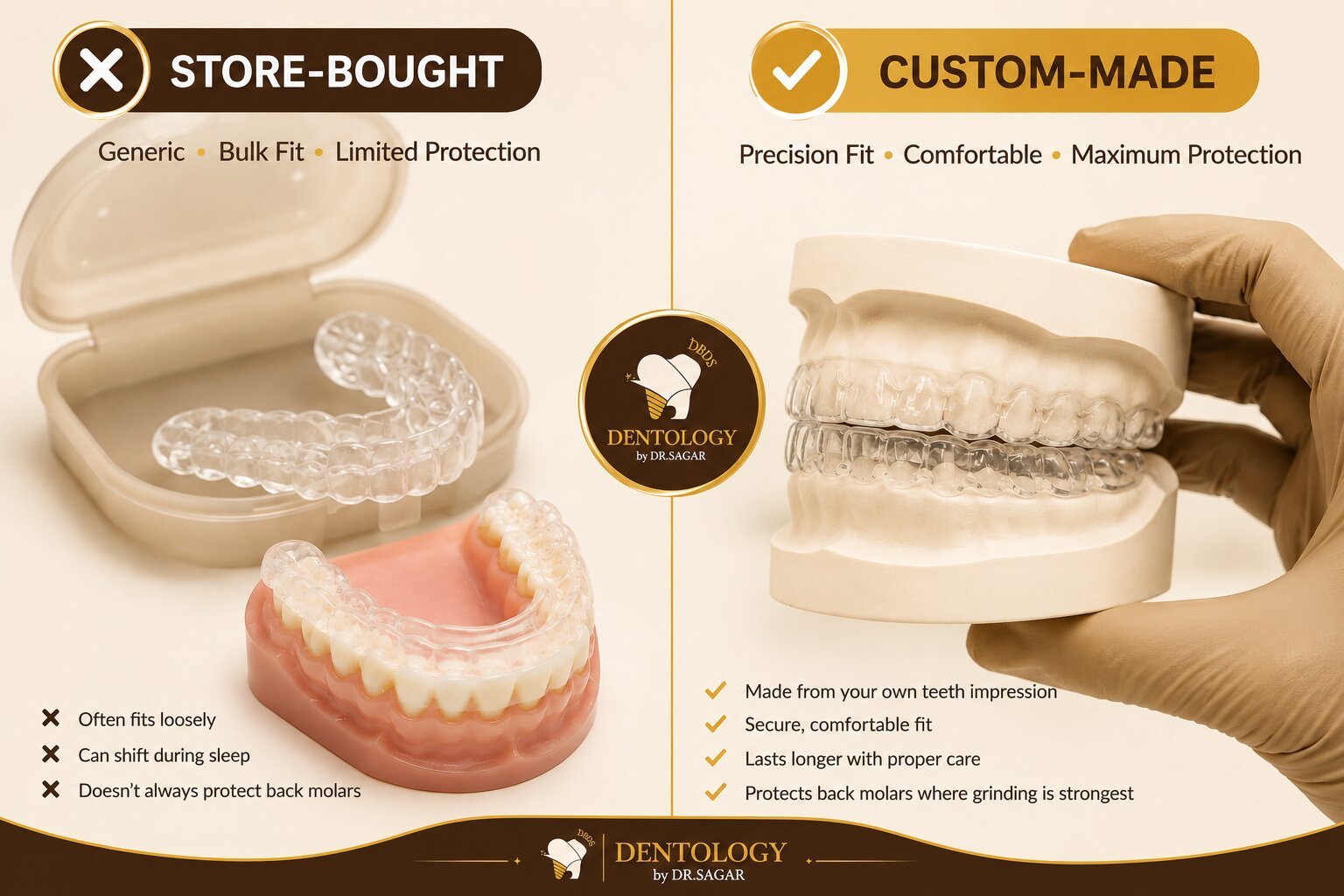
It’s tempting to grab a boil-and-bite guard from a pharmacy, but the two options aren’t equal:
- Store-bought guards: cheap and easy to find, but often fit loosely, can shift overnight, and rarely protect the back molars where grinding forces are strongest
- Custom night guards: made from an impression of your own teeth, sit securely, last longer, and are built around your specific bite pattern
For anyone dealing with regular grinding, a custom guard is the more reliable long-term solution.
FAQs
Do night guards actually stop grinding, or just protect teeth?
A night guard doesn’t cure bruxism itself, but it prevents your teeth from grinding directly against each other, which stops the wear and often reduces jaw tension as a side effect.
How long does a custom night guard last?
With proper care, a custom night guard typically lasts three to five years, though heavy grinders may need a replacement sooner.
Is it normal for a new night guard to feel uncomfortable at first?
Yes, a short adjustment period of a few nights to a couple of weeks is common; if discomfort continues beyond that, it likely needs a fit adjustment.
Can children need night guards too?
Yes, some children grind their teeth, especially during stressful periods or while adult teeth are coming in, and a dentist can advise whether a guard is appropriate at that age.
How do I know if my headaches are related to grinding?
Headaches caused by bruxism usually appear soon after waking and are centred around the temples or jaw; a dentist can check for wear patterns and muscle tenderness to confirm the connection.
Protect Your Smile Before the Damage Is Done
Don’t wait for a cracked tooth to take grinding seriously. At Dentology by Dr. Sagar, we’ll evaluate your bite, check for signs of grinding, and fit you with a custom night guard built specifically for your teeth.
📞 Call +91 98786 46775 or book your appointment online to protect your smile while you sleep.