Losing a tooth can affect much more than your appearance. It can make chewing difficult, affect speech, and even lead to bone loss in the jaw over time. Dental implants have become one of the most reliable and long-lasting solutions for replacing missing teeth because they look, feel, and function like natural teeth.
Many patients are interested in implants but are unsure about what the treatment actually involves. Understanding each step can help you feel more confident and prepared for the journey.
What Is a Dental Implant?
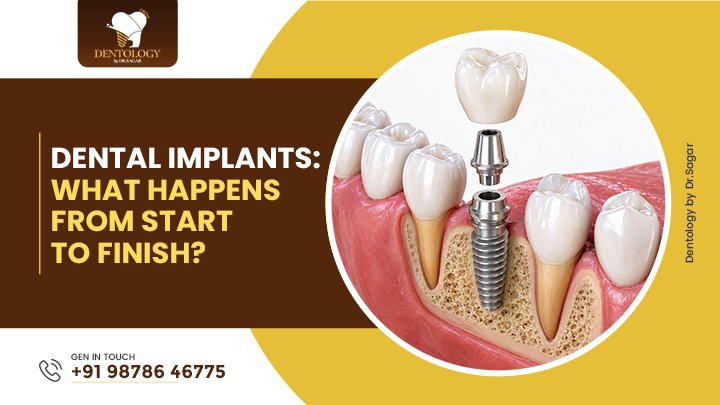
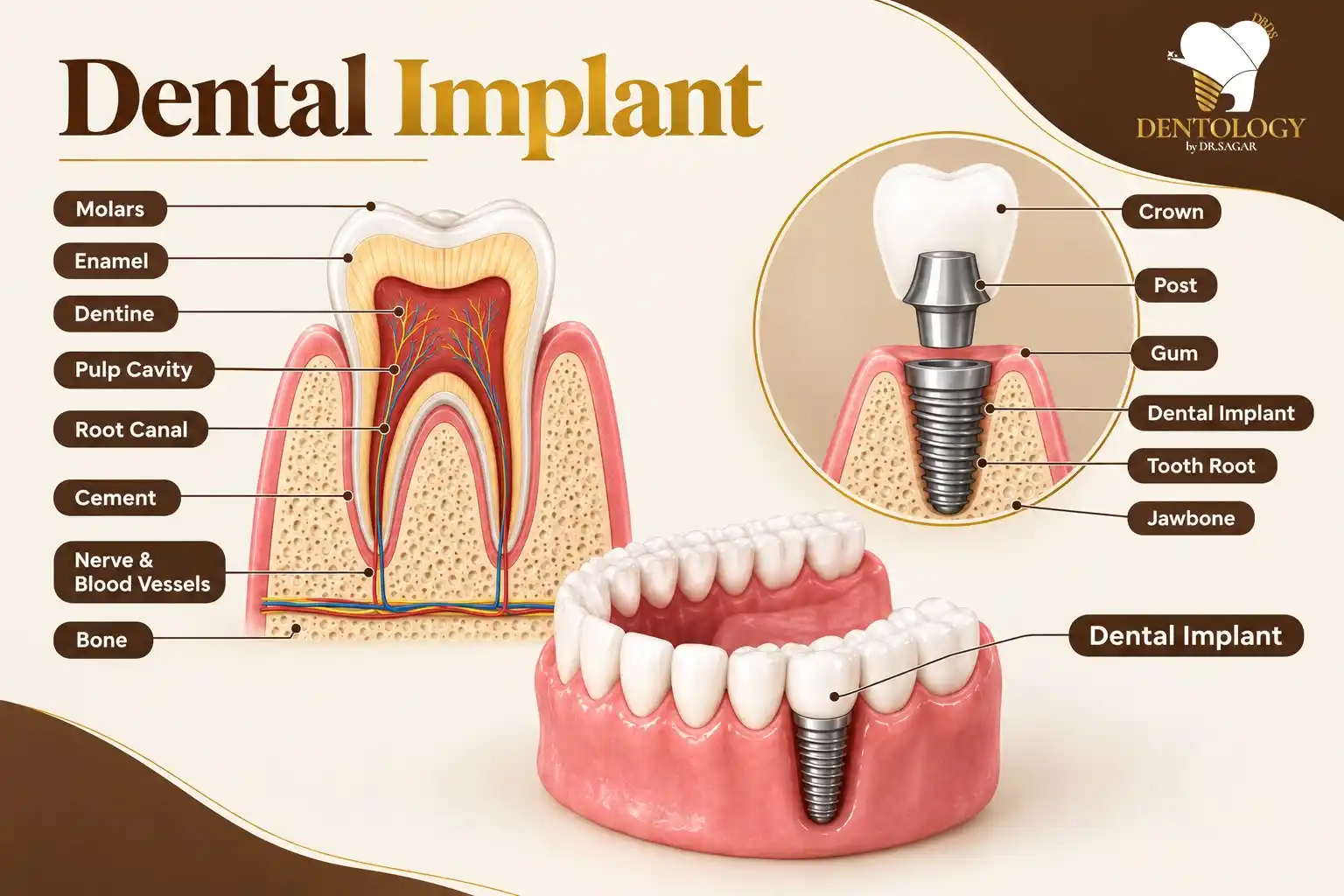
A dental implant is a small titanium post that is placed into the jawbone to replace a missing tooth root. Once the implant integrates with the bone, it serves as a stable foundation for a dental crown, bridge, or denture.
Dental implants are designed to:
- Replace missing teeth permanently
- Restore chewing ability
- Improve appearance
- Prevent jawbone loss
- Maintain facial structure
Step 1: Initial Consultation and Examination
The process begins with a comprehensive dental examination.
During this appointment, your dentist will:
- Review your medical and dental history
- Examine your gums and remaining teeth
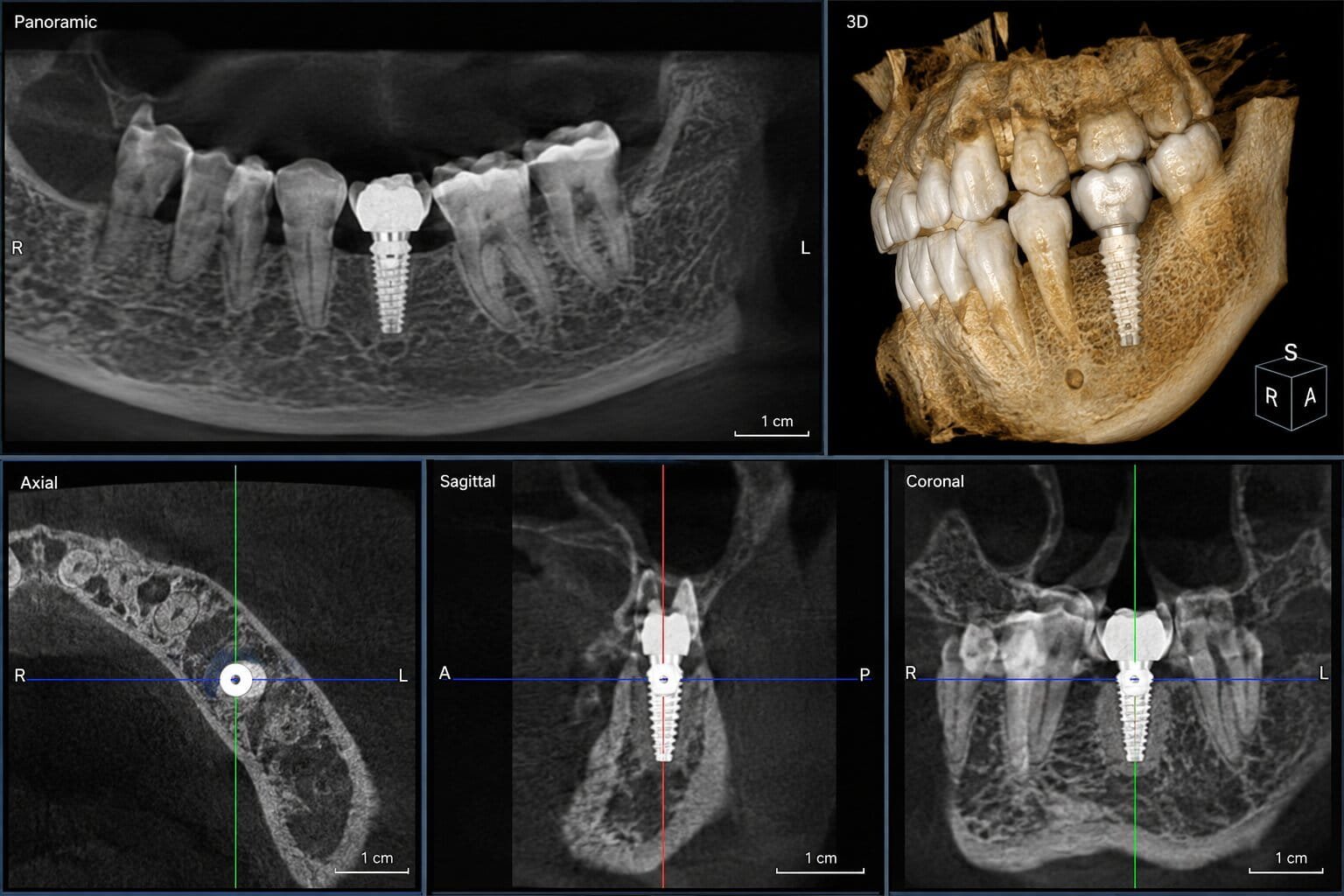
- Take digital X-rays
- Assess bone density and jaw health
- Discuss treatment goals
In some cases, a CBCT scan may be recommended to provide a detailed three-dimensional view of the jawbone and surrounding structures.
Step 2: Treatment Planning
After evaluating your oral health, a personalized treatment plan is created.
Your dentist will determine:
- The number of implants needed
- Implant placement locations
- Whether bone grafting is required
- Estimated treatment timeline
- Final restoration options
Careful planning helps ensure long-term success and optimal aesthetics.
Step 3: Tooth Extraction (If Necessary)
If a damaged or failing tooth is still present, it may need to be removed before implant placement.
Depending on the situation:
- The implant may be placed immediately after extraction
- Healing may be allowed before implant surgery
Your dentist will recommend the best approach based on your specific condition.
Step 4: Bone Grafting (If Required)
Some patients do not have enough jawbone to support an implant securely.
Bone grafting may be recommended when:
- A tooth has been missing for a long time
- Bone loss has occurred due to gum disease
- The jawbone is naturally thin
The graft helps rebuild bone volume and creates a strong foundation for the implant.
Step 5: Implant Placement Surgery
The implant placement procedure is usually performed under local anesthesia.
During the procedure:
- The gum tissue is gently opened.
- A precise space is prepared in the jawbone.
- The titanium implant is inserted.
- The gum is closed around the implant.
Most patients report that implant surgery is more comfortable than they expected.
Step 6: Healing and Osseointegration
This is one of the most important stages of the implant process.
Over the next several months, the implant gradually fuses with the jawbone through a process called osseointegration.
This healing period typically takes:
- 3 to 6 months for most patients
Once complete, the implant becomes firmly anchored in the bone, similar to a natural tooth root.
Step 7: Abutment Placement
After successful healing, a small connector called an abutment is attached to the implant.
The abutment:
- Connects the implant to the crown
- Supports the final restoration
- Helps create a natural appearance
The gums are allowed to heal around the abutment before the final crown is placed.
Step 8: Impressions and Crown Fabrication
Precise impressions or digital scans are taken to create a custom-made crown.
The dental laboratory designs the crown to match:
- Tooth color
- Shape
- Size
- Bite alignment
The goal is to ensure the replacement tooth blends naturally with the surrounding teeth.
Step 9: Final Crown Placement
Once the crown is ready, it is securely attached to the abutment.
Your dentist will check:
- Bite alignment
- Comfort
- Appearance
- Function
At this stage, your implant restoration is complete and ready for everyday use.
How Long Do Dental Implants Last?
With proper care, dental implants can last for decades.
Their longevity depends on:
- Good oral hygiene
- Regular dental checkups
- Healthy gums
- Avoiding smoking
- Managing teeth grinding habits
Many implants remain successful for 20 years or more.
Benefits of Dental Implants
Dental implants offer several advantages over traditional tooth replacement options.
Natural Appearance
Implants closely resemble natural teeth.
Improved Chewing Ability
They provide strong biting force without slipping.
Bone Preservation
Implants help prevent jawbone shrinkage after tooth loss.
Long-Term Durability
They are one of the most predictable and durable dental treatments available.
Better Oral Health
Unlike bridges, implants do not require adjacent teeth to be altered.
Are Dental Implants Painful?
Most patients experience only mild discomfort after implant surgery.
Any soreness is typically manageable with:
- Prescribed medications
- Cold compresses
- Soft foods during recovery
Many patients compare the recovery to a routine tooth extraction.
Conclusion
Dental implants provide a durable, natural-looking solution for missing teeth. From the initial consultation to the final crown, every step is carefully planned to ensure long-term success and comfort. Although the process takes several months, the result is a stable and functional replacement tooth that can improve both oral health and confidence.
Investing in dental implants is often an investment in your long-term smile, comfort, and quality of life.
Restore Your Smile at Dentology by Dr. Sagar
If you are missing one or more teeth and want a long-lasting replacement option, schedule a consultation at Dentology by Dr. Sagar. Dr. Sagar Sachdeva will evaluate your oral health and create a personalized implant treatment plan designed for lasting results.
📞 Call: +91 98786 46775
FAQs
1. How long does the dental implant process take?
The complete process typically takes 3 to 9 months, depending on healing time and whether bone grafting is required.
2. Are dental implants safe?
Yes. Dental implants have a high success rate and are considered a safe and predictable treatment when performed by a qualified dentist.
3. Can anyone get dental implants?
Most healthy adults are candidates for implants, but sufficient jawbone and healthy gums are important factors.
4. How do I care for a dental implant?
Brush, floss, and attend regular dental checkups just as you would for natural teeth.
5. Is a dental implant better than a bridge?
In many cases, implants offer better long-term benefits because they preserve bone and do not require adjacent teeth to be altered.